Finding it is harder than it should be. Waterless soaps, no-rinse cleansers and hand sanitizers share the same shelf, and after the second bottle their labels start to sound alike.
We wrote this for parents packing diaper bags, caregivers on long shifts, and anyone heading into a road trip or a rainy weekend at the campsite. Here's what to check before you buy, plus the one job where waterless soap can't stand in for a sink.
TL;DR Quick Answers
Best Waterless Hand Soap
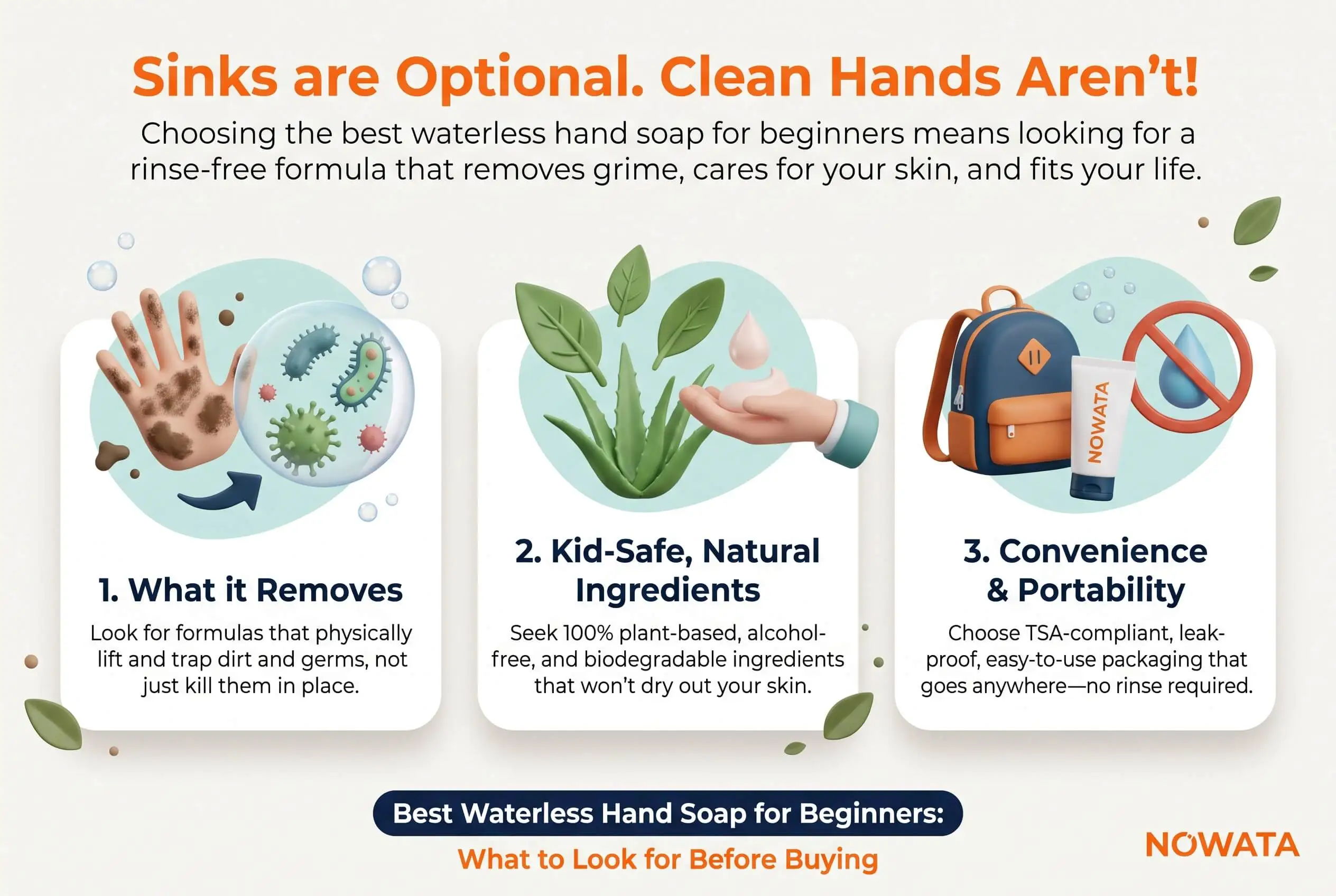
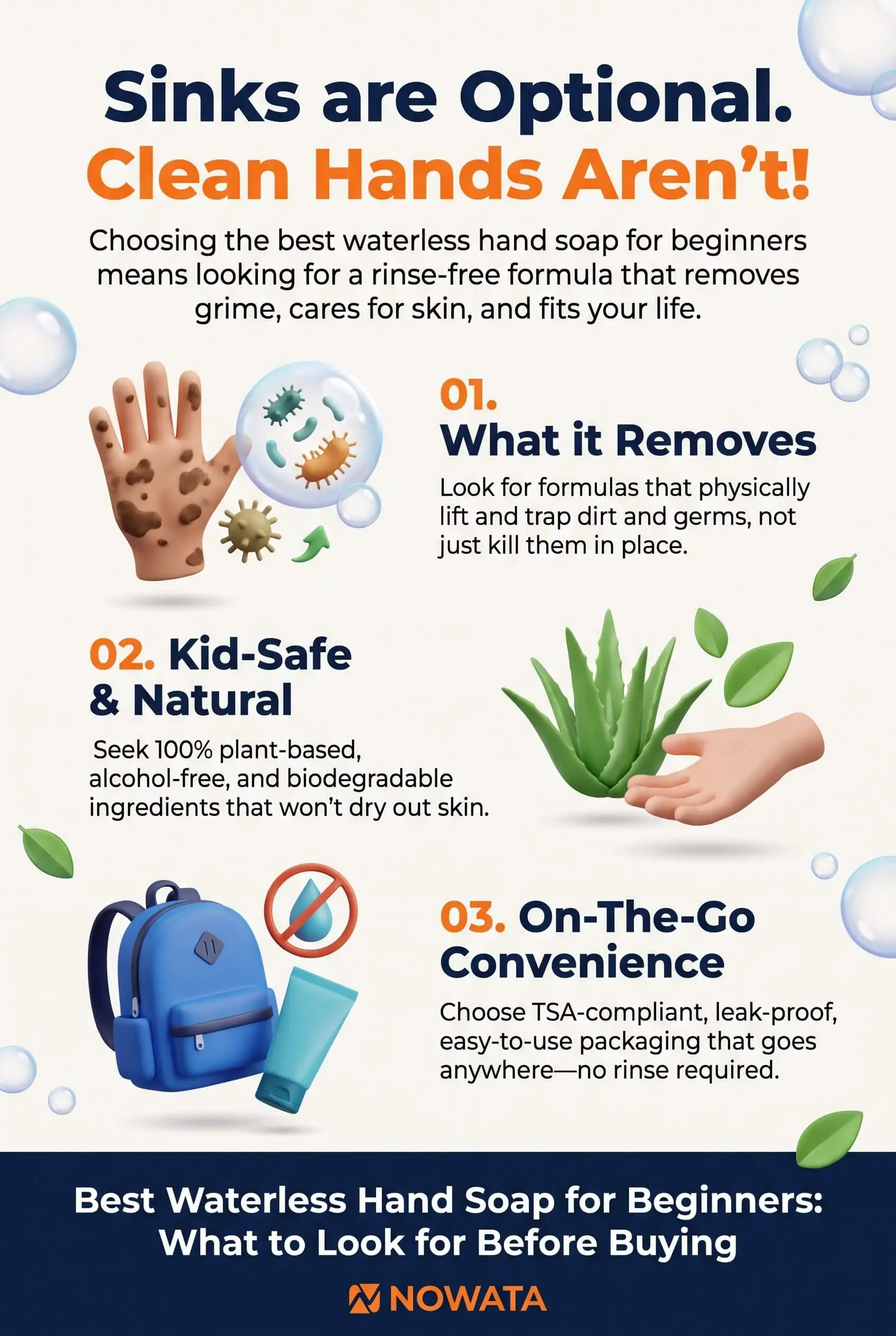
The best waterless hand soap removes dirt and germs from dry hands without a rinse and leaves nothing behind on your skin. Look for one that:
Lifts grime off so you can wipe or brush it away, rather than just killing germs and drying on top
Is alcohol-free and plant-based, so frequent use won't dry your hands out
Is fragrance-free, the gentler pick for kids and sensitive skin
Leaves no sticky film ten minutes after use
Backs any "99.9%" claim with a clear footnote
Comes in a size you'll carry to the car, the diaper bag or the campsite
After the bathroom, and any time your hands are greasy or visibly dirty, use soap and water instead.
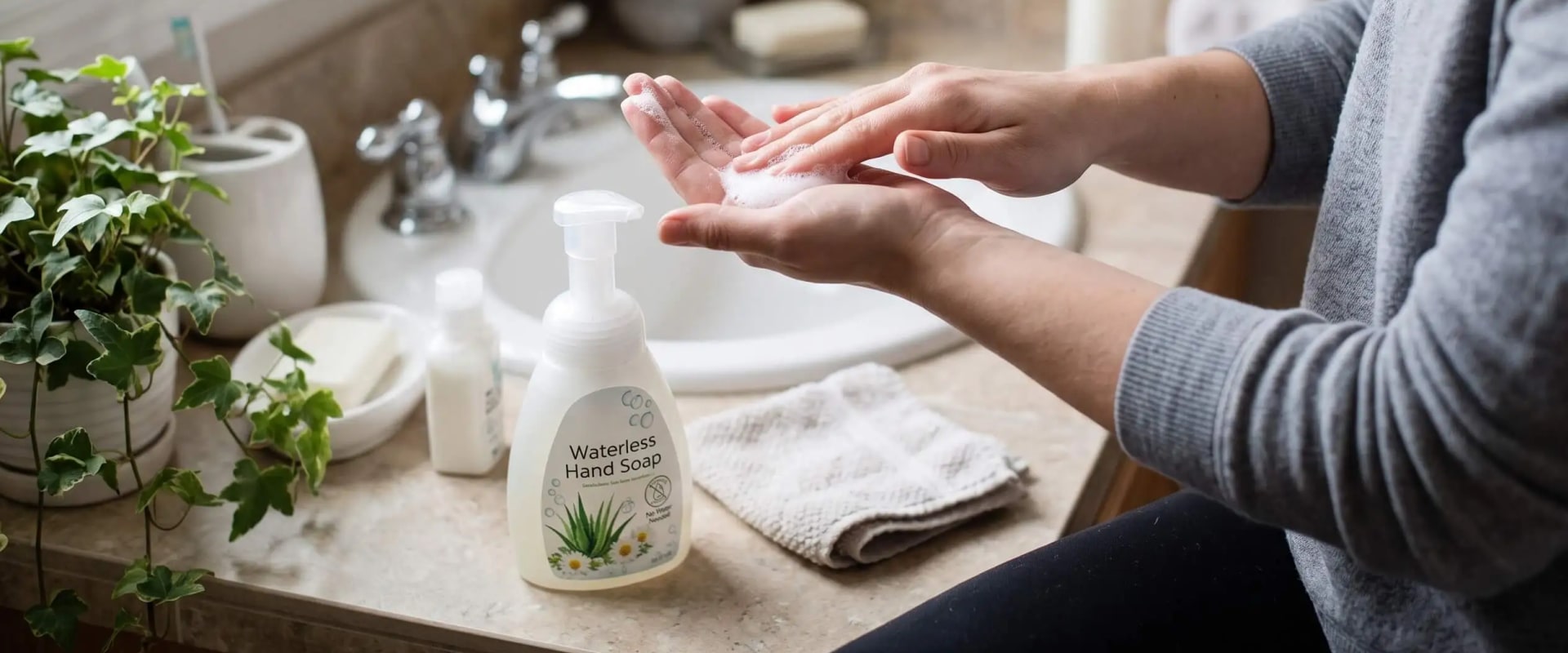
What is waterless hand soap? It's a cleanser you rub onto dry hands and then wipe or brush away, so you never need water.
What should a beginner look for? Choose an alcohol-free, plant-based, fragrance-free formula that leaves no residue and explains its testing claims clearly.
Is it the same as sanitizer? No. Sanitizer kills some germs and dries on your skin, while waterless soap removes dirt and germs from it.
When should I use soap and water instead? Head to the sink after the bathroom, before you prep food, and whenever your hands are greasy or visibly dirty.
Where is it most useful? Keep it in the car, the diaper bag, the classroom, your travel kit, the campsite bin and your emergency supplies.
Top Takeaways
Waterless hand soap lifts dirt off dry hands without a rinse, while sanitizer kills some germs and dries on your skin.
Alcohol-free, plant-based and fragrance-free formulas give beginners the gentlest start.
Skip anything that leaves a sticky residue. Your hands ten minutes later tell you more than the label does.
Read the footnote on any "99.9%" claim before you believe it.
Buy a size you'll carry to the car, the diaper bag, the classroom or the campsite.
Soap and water still wins after the bathroom, before you cook, and whenever your hands are greasy or visibly dirty.
What Waterless Hand Soap Is and How It Works
Waterless hand soap goes on dry hands and comes off with a wipe or a quick brush. You skip the sink and the towel entirely.
It runs on the same idea as regular soap. Cleansing ingredients grab oil and dirt so they let go of your skin. At a sink, running water carries all of that away. Here, the product does the carrying, and you brush or wipe the residue off.
Sanitizer works differently. It's designed to kill germs and then dry right where it landed. Waterless soap is designed to take what's on your hands off them, and as far as we're concerned, removal beats killing.
Waterless Hand Soap vs Hand Sanitizer vs Soap and Water
Waterless hand soap
Needs no water
Lifts dirt and germs and carries them off your skin
Handles light grime, though greasy or soiled hands still need soap and water
Shouldn't leave residue once you wipe it off as directed
Usually made with plant-based cleansers, often alcohol-free
Best when there's no sink nearby
Hand sanitizer
Needs no water
Kills some germs on contact
Not recommended for visibly dirty hands
Often leaves a tacky film
Contains at least 60% alcohol
Best when there's no sink nearby and your hands aren't dirty
Soap and water
Needs water
Lifts dirt and germs and rinses them away
The best choice for visibly dirty hands
Leaves no residue
Plain soap does the job
Best whenever a sink is available
What to Look for in the Best Waterless Hand Soap
Alcohol-Free Formula
Alcohol works fast. It also pulls moisture out of your skin, and if you're cleaning your hands over and over through the day, you'll feel it. Alcohol-free formulas are much easier to live with.
A Short, Plant-Based Ingredient List
Flip the bottle over. The front is marketing, while the back tells you what's inside. A shorter list makes it easier to spot what you'd rather skip, and a label that leaves out parabens, phosphates, triclosan and synthetic fragrance is a solid place to start.
No Sticky Residue
Clean hands should feel like clean hands, not like something got painted on them. If you can still feel a film an hour later, keep looking.
Gentle Enough for Sensitive Skin and Kids
Fragrance-free is the safer bet for sensitive skin. Try any new product on a small patch first, and keep an eye on young kids whenever they use a hand cleaner.
Uses per Bottle and Portability
Do the math on cost per use instead of price per bottle. Size matters just as much. The small bottle clipped to a backpack gets used every day, while the big one left on the bathroom counter mostly collects dust.
Honest Testing Claims
Any "99.9%" on a label owes you a footnote, so read it. Look for what the brand tested, how it ran the test, and whether it admits the result doesn't mean disease prevention. Brands willing to spell out their limits tend to be the ones worth trusting.
How to Choose the Right Waterless Hand Soap for Your Routine
Start with where the bottle will live. A diaper bag, a classroom desk, a car console, a campsite and an emergency kit all need a small, leak-proof bottle and a formula that won't leave little hands sticky.
Then work through the checklist. NOWATA's no-rinse formula shows what the best waterless hand soap traits look like in one bottle. It's plant-based and alcohol-free, and it clumps around dirt so you can brush the whole mess away with nothing left behind.
Before you buy, check that the soap:
Is alcohol-free
Lists plant-based ingredients you can actually read
Skips synthetic fragrance, parabens and triclosan
Leaves no residue after you wipe or brush it off
Comes in a size you'll really carry
Explains its testing claims in plain terms
How to Use Waterless Hand Soap the Right Way
Start with dry hands, and shake or brush off loose dirt first.
Use a small amount. More soap won't get your hands any cleaner.
Work it over your palms, the backs of your hands, between your fingers and around your nails.
Brush or wipe away the residue the way the label tells you to.
When Waterless Soap Is Not Enough
Waterless soap backs up your handwashing routine rather than replacing it. After the bathroom, before you cook, and any time your hands are greasy or visibly dirty, head to the sink.
The CDC says soap and water remove certain germs, including norovirus, Cryptosporidium and C. difficile, better than sanitizers do. So when a sink is close, use it. When it isn't, a good waterless soap is the next thing to reach for.
"The first waterless soap I bought turned out to be a sanitizer with a nicer label. My hands felt clean for maybe thirty seconds, then tight and tacky for the next hour. Since then I judge every product by how my hands feel ten minutes later, not the moment after. I keep a small alcohol-free bottle in the car now, and another in the camping bin. My kids run what I call the snack test. If they can clean up and grab crackers without complaining that their fingers feel weird, the soap stays. If it leaves a film, it goes, no matter what the front label promises. I also tell beginners to read the footnote. A brand that says exactly what it tested, and what that test doesn't prove, has earned more of my trust than one shouting 99.9% with no explanation. And keep the sink in the picture. Waterless soap is what you use until you can get to soap and water, so don't treat it as a reason to skip them."
7 Essential Resources
About Handwashing (CDC). Start here for the basics on when to wash, how to lather every surface, and what to reach for when there's no sink.
Hand Sanitizer Guidelines and Recommendations (CDC). The CDC explains why sanitizer struggles on greasy or visibly dirty hands, and which germs soap and water handle better.
Skip the Antibacterial Soap; Use Plain Soap and Water (FDA). Worth a read before an "antibacterial" label talks you into anything. It also covers what the FDA's 2016 rule changed.
How It Works: Cleaning Hands with Waterless Hand Sanitizer (Minnesota Department of Health). A short walk-through of technique and friction, and why the dirt has to come off first.
Dry Skin Relief from Handwashing (American Academy of Dermatology). Dermatologists share steps for keeping your hands from cracking when you clean them all day.
Dermatologists' Top Tips for Relieving Dry Skin (American Academy of Dermatology). Here's why fragrance-free products are the safer pick for dry, sensitive skin.
Bathroom Faucets (EPA WaterSense). If cutting water waste matters to you, this page shows how much an ordinary sink actually runs.
3 Statistics
23 to 40%. According to the CDC's Handwashing Facts, handwashing education in a community cuts the number of people who get sick with diarrhea by 23 to 40%. The habit matters more than any bottle, so pick a waterless soap you'll actually use.
19 ingredients. The FDA barred 19 active ingredients, triclosan and triclocarban among them, from consumer antiseptic washes in 2016. Manufacturers hadn't shown those ingredients were safe for long-term daily use or any more effective than plain soap and water. When a label leans hard on "antibacterial," read the ingredient list.
2.2 gallons per minute. That's the U.S. federal standard flow rate for a bathroom sink faucet, and WaterSense-labeled faucets cap it at 1.5 (EPA WaterSense). Every no-rinse clean at the campsite or in the car is water you didn't run.
These statistics highlight the importance of proper hand hygiene, whether you're outdoors, traveling, or providing private home care. Choosing a gentle, alcohol-free waterless hand soap can make everyday cleanup more convenient when running water isn't available, while regular handwashing with soap and water remains the preferred option whenever possible.
Final Thoughts: Removal Beats Residue
Our take is simple. While the loudest label on the shelf gets your attention, the best waterless hand soap for a beginner is the one that gets the dirt off your hands and leaves nothing behind.
A lot of what sits in this aisle is sanitizer in disguise. It kills some germs, then hangs around on your skin as a sticky film, and that isn't what clean should feel like.
So start small. Pick an alcohol-free formula, read the ingredient list, and check the footnote on any big claim before you trust it. Carry it wherever a sink isn't, and keep washing with soap and water wherever one is. That balance keeps your routine honest far better than any single bottle can.
Frequently Asked Questions
What is the best waterless hand soap for beginners?
For a beginner, the best waterless hand soap is alcohol-free, made with plant-based ingredients, and leaves no sticky residue. It should be gentle enough for frequent use, and its label should give you clear instructions and explain any testing claims. Start with a small bottle and pay attention to how your hands feel after a week.
Does waterless hand soap work as well as soap and water?
When there's no sink nearby, waterless hand soap is a strong option. Soap and water is still your first choice after the bathroom, before you prepare food, and whenever your hands are greasy or visibly dirty. Treat waterless soap as backup for handwashing rather than a replacement.
Is waterless hand soap the same as hand sanitizer?
No. Hand sanitizer is designed to kill some germs and then dry on your skin, and it often leaves a tacky film behind. Waterless hand soap lifts dirt and germs so you can wipe or brush them away, which makes removal its whole job.
Is waterless hand soap safe for kids and sensitive skin?
Alcohol-free, fragrance-free formulas are generally gentler on sensitive skin and on little hands. Test any new product on a small patch of skin first. Supervise young children whenever they use a hand cleaner, and stop using any product that causes redness or irritation.
How do you use waterless hand soap?
Start with dry hands and brush off loose dirt. Apply a small amount and rub it over your palms, the backs of your hands, between your fingers and around your nails. Then wipe or brush away the residue as the label directs.
How long does a bottle of waterless hand soap last?
That depends on the bottle size and how much you use each time. Many brands list uses per bottle, which makes comparing values easy. A small amount per use goes further than most people expect.
Ready to Try Your First Waterless Hand Soap?
Save the checklist above and bring it along the next time you shop for waterless hand sanitizers. Start with one small, alcohol-free bottle, and keep it where you'll need it most, whether that's the car, the diaper bag or the camping bin.
For a plant-based, no-rinse option that leaves nothing behind, NOWATA is a good place to start. Already using a waterless soap you love? Tell us what works in the comments so the next beginner can learn from you.