Quick Answers
Carpet Removal
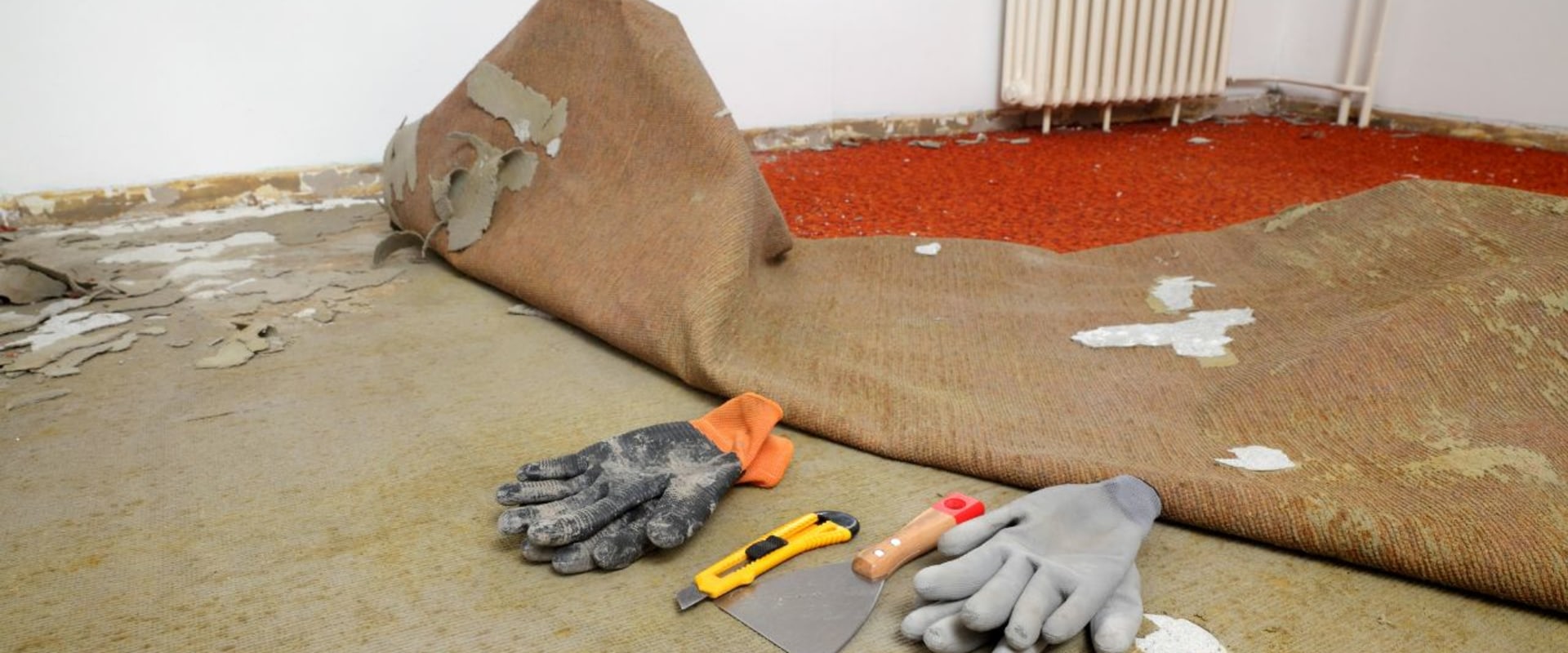
Carpet removal is the controlled process of lifting carpet, padding, and fasteners without damaging the floor underneath. From real-world experience, success comes from following the correct sequence—cut and roll the carpet, remove padding separately, manage dust, and plan disposal early, including mattress disposal when applicable, to protect floors, indoor air quality, and recycling outcomes.
Top Takeaways
Plan the removal before you start.
Follow the correct sequence, not brute force.
Manage dust to protect indoor air quality.
Clean removal improves recycling outcomes.
Carpet removal sets up the success of what follows.
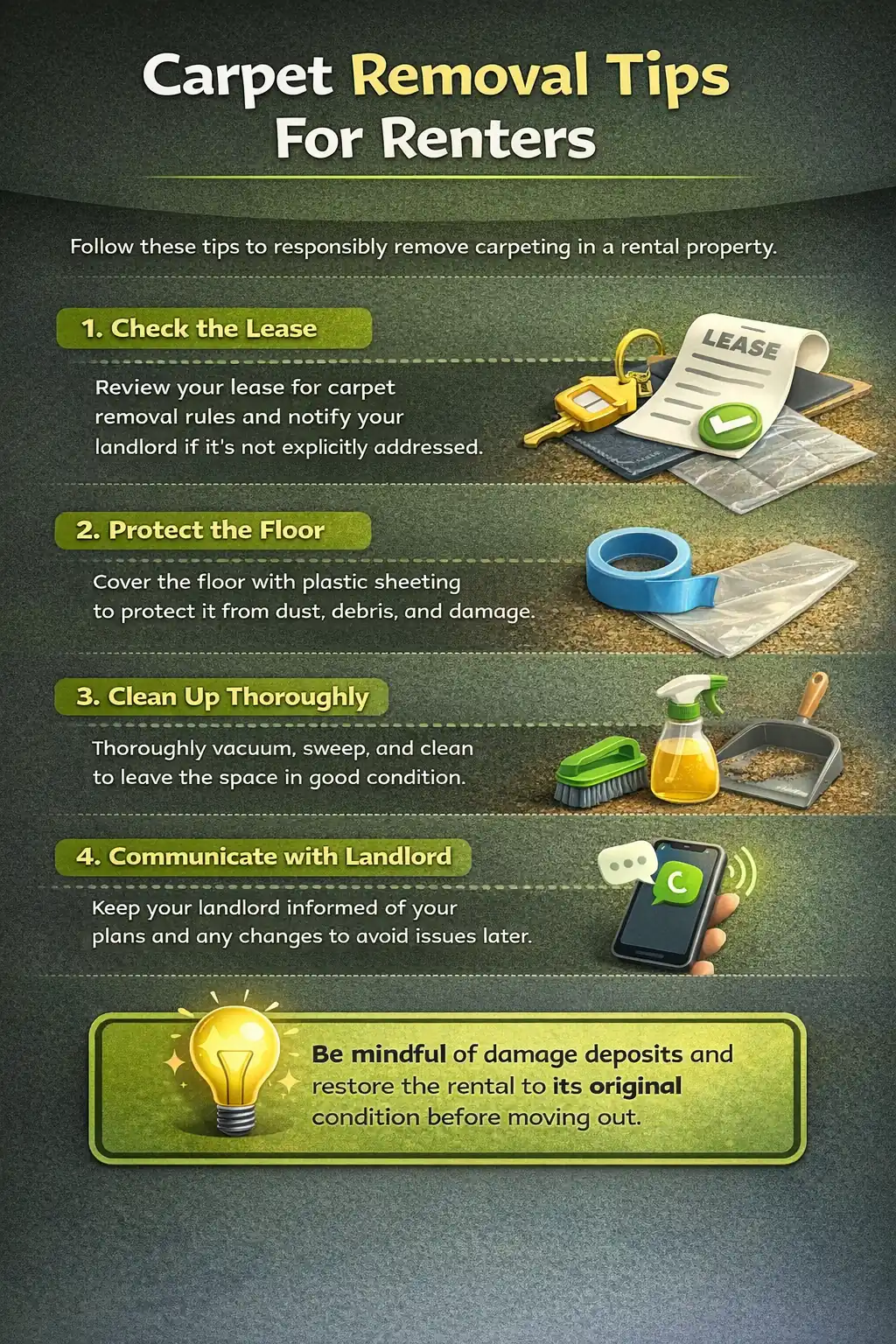
Carpet Removal Tips For Renters
Removing carpet in a rental requires extra caution. Unlike homeowners, renters must protect the unit’s condition, follow lease rules, and avoid changes that can lead to deductions during move-out inspections. These tips focus on minimizing risk while still getting the job done correctly.
Check Your Lease and Get Approval First
Before removing any carpet, review your lease. Many rentals require written permission for permanent changes. Getting approval upfront can prevent disputes and protect your deposit.
Document the Carpet and Floor Condition
Take clear photos before starting. Documenting stains, wear, or existing damage helps protect you if questions come up later during inspection.
Use Low-Impact Removal Methods
Cut carpet into small sections and remove padding slowly. Avoid aggressive scraping or prying that can damage subfloors, tack strips, or baseboards.
Be Careful With Glue and Adhesive
Glued-down carpet is common in rentals. Focus on lifting carpet first and addressing adhesive carefully to avoid gouging concrete or wood.
Plan for Proper Disposal
Old carpet piles up quickly. Plan disposal or recycling in advance, with a valet trash service as an option, so debris doesn’t sit in the unit or violate building rules.
Know When to Call a Professional
If carpet is heavily glued, covers stairs, or the floor underneath must remain intact, professional removal and junk removal services can reduce risk and save your deposit.
“Most deposit disputes we see don’t start with the carpet—they start with what’s underneath it. From our experience handling rental turnovers, careful removal and documentation matter more than speed when you’re trying to protect your deposit.”
Essential Resources
Whether you’re planning to tackle carpet removal yourself or just want to understand your options, these trusted resources reflect the kinds of information we turn to at Jiffy Junk. They’ll help you understand the process, the rules, and how to dispose of or recycle old carpet responsibly.
Know What the Full Carpet Removal Process Involves
Remoovit — Carpet Removal Made Easy: Steps, Costs, and Disposal Options
Walks through the carpet removal process from start to finish and highlights what to expect for labor, timing, and disposal decisions before you start.
https://blog.remoovit.com/2025/08/24/carpet-removal-made-easy-steps-costs-and-disposal-options/
Understand the Federal Framework for Waste and Disposal
EPA — Resource Conservation and Recovery Act (RCRA)
Provides the federal waste rules that influence how carpet and other materials need to be disposed of. Useful context if you’re trying to do things the right way.
https://en.wikipedia.org/wiki/Resource_Conservation_and_Recovery_Act
Explore Practical Disposal and Recycling Options
Flooring Clarity — Where to Dispose Carpet & Recycling Options
Breaks down disposal choices including recycling facilities, drop-off points, donation options, and landfill rules so you can decide what’s best for your space and budget.
https://www.flooringclarity.com/where-dispose-carpet-options-removal-recycling/
Avoid Common Disposal Mistakes
Carpet Reviewed — Where to Throw Away Carpet Properly
Explains what most local waste programs will accept, what they won’t, and when recycling or donation is a better choice—helping you avoid fines or extra fees.
https://carpetreviewed.com/where-dispose-carpet-responsible-carpet-removal-disposal-u-s/
Connect With National Carpet Recycling Programs
Carpet America Recovery Effort (CARE)
A nonprofit that helps divert carpet from landfills by supporting recycling across the U.S. This is a great resource if recycling matters to you.
https://carpetrecovery.org/
Find Carpet Recycling Centers Near You
CARE – Collector Finder Map
Use this tool to locate carpet and padding recycling facilities near your home. It’s an easy way to figure out where old carpet should go once it’s removed.
https://ditchforgood.com/solution/cares-collector-finder-map
Learn How to Prepare Carpet for Recycling
GreenCitizen — Carpet Recycling Guide
Covers practical steps for prepping carpet for recycling—like separating materials and understanding recycler requirements—so your removal efforts lead to real reuse and not landfill waste.
https://greencitizen.com/blog/carpet-recycling/
These resources help homeowners understand carpet removal, disposal rules, and recycling options in a way that supports private home care by reducing indoor dust, preventing waste buildup, and ensuring old carpet is handled responsibly within the household environment.
Supporting Statistics
These numbers reflect what hands-on carpet removal experience shows every day—planning and technique matter.
Carpet creates significant landfill waste
4+ billion pounds discarded annually in the U.S.
1%+ by weight of municipal solid waste
~2% by volume due to bulk
Source: U.S. EPA (.gov)
https://www.epa.gov/greenerproducts/identifying-greener-carpetRemoval impacts indoor air quality
Americans spend ~90% of time indoors
Indoor pollutants are often 2–5× higher than outdoors
Controlled removal and ventilation reduce dust exposure.
Source: U.S. EPA (.gov)
https://www.epa.gov/report-environment/indoor-air-qualityClean removal boosts recycling
Tens of thousands of tons recycled annually
Some programs reach ~40% recycling rates
Clean separation improves recycling outcomes.
Source: Carpet America Recovery Effort (.org)
https://carpetrecovery.org/
Bottom line: How carpet is removed affects waste, air quality, and recycling success.
Final Thought & Opinion
Experience shows that successful carpet removal is about intention, not effort. Problems usually come from rushing or skipping planning.
What makes removal go smoothly:
Understanding how the carpet is installed
Managing dust and ventilation
Planning disposal before starting
What we see when it’s done right:
Floors stay protected
Indoor air quality is easier to manage
More carpet is recycled instead of landfilled
Our perspective:
Carpet removal isn’t just cleanup. It’s a controlled process that sets up everything that follows.
FAQ on Carpet Removal
Q: What does carpet removal involve?
A:
Remove carpet, padding, and fasteners
Follow the correct order
Protect the floor underneath
Q: How long does carpet removal take?
A:
Most rooms: 1–2 hours
Glued carpet or stairs: Longer due to careful cleanup
Q: Can carpet removal damage floors?
A:
Yes, if rushed
Controlled removal reduces risk
Q: Is DIY carpet removal a good idea?
A:
Works for small rooms
Higher risk with glue, stairs, or finished floors
Q: What should be done with old carpet?
A:
Plan disposal early
Clean removal improves recycling options