First-time renters tend to make the same mistakes: ordering by price alone instead of by weight allowance, missing the permit step, throwing in a piece of furniture or appliance that triggers a surcharge, or keeping the dumpster a few days too long. Each of those mistakes adds $25 to $200 to the final invoice. Together they're the difference between a clean $300 cleanout and a $600 surprise.
Based on price quotes pulled across multiple zip codes and reviewed against published cost guides from Angi, HomeGuide, and Dumpsters.com, this guide breaks down how much does it cost to rent a small dumpster for a first-time renter, what's bundled into the base rate, and which fees to ask about before signing.
TL;DR Quick Answers
How much does it cost to rent a small dumpster?
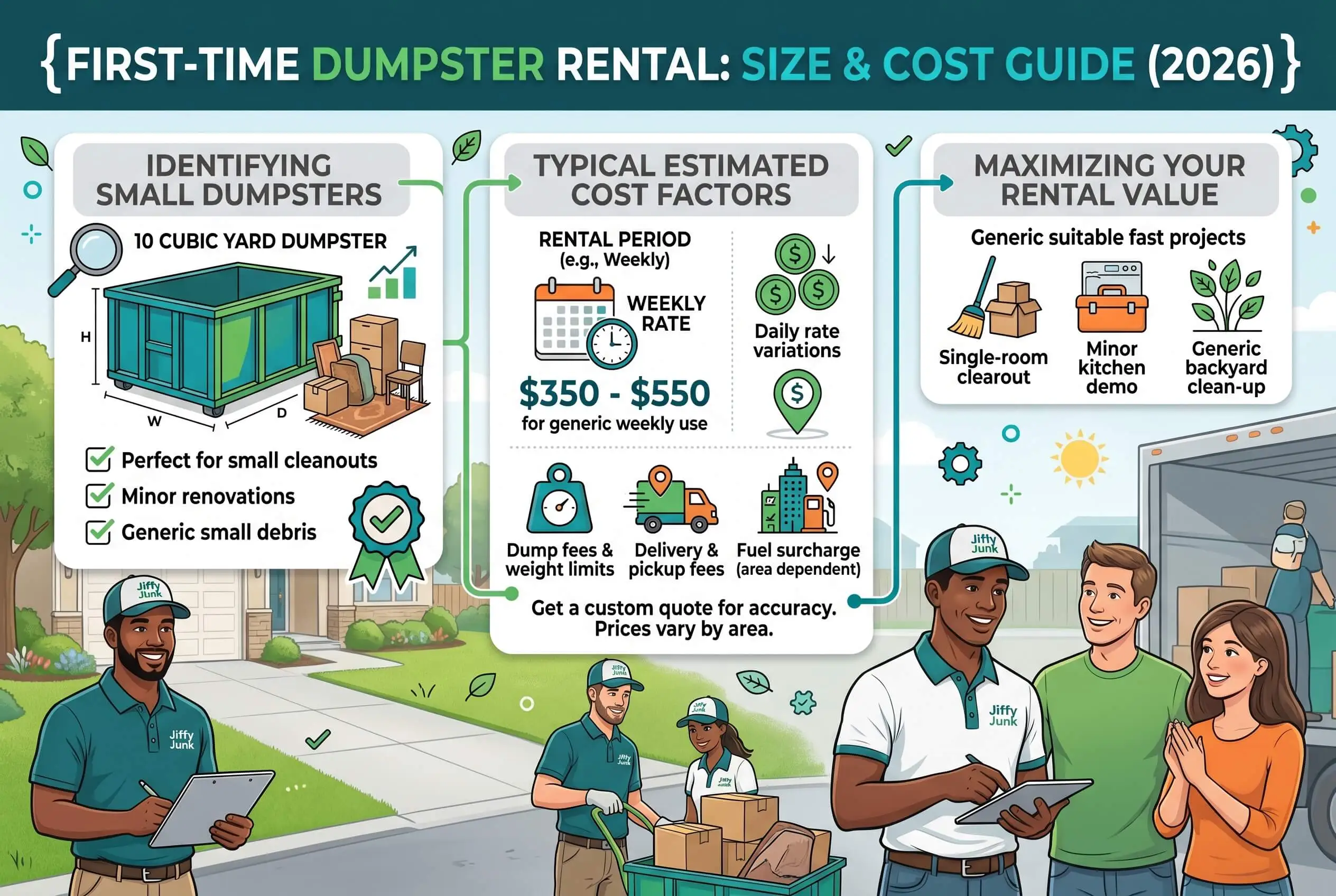
A small dumpster rental typically costs $220 to $500 for a 7-day rental of a 10-yard container, with the U.S. national average sitting around $320 to $385.
Most first-time renters land in that range. The base rate covers delivery, pickup, a 7- to 10-day rental window, and a 2- to 3-ton weight allowance. Anything outside that bundle is an add-on.
Dumpster bag (smallest option): $130–$200, about a 1-ton weight limit. Best for single-room cleanouts.
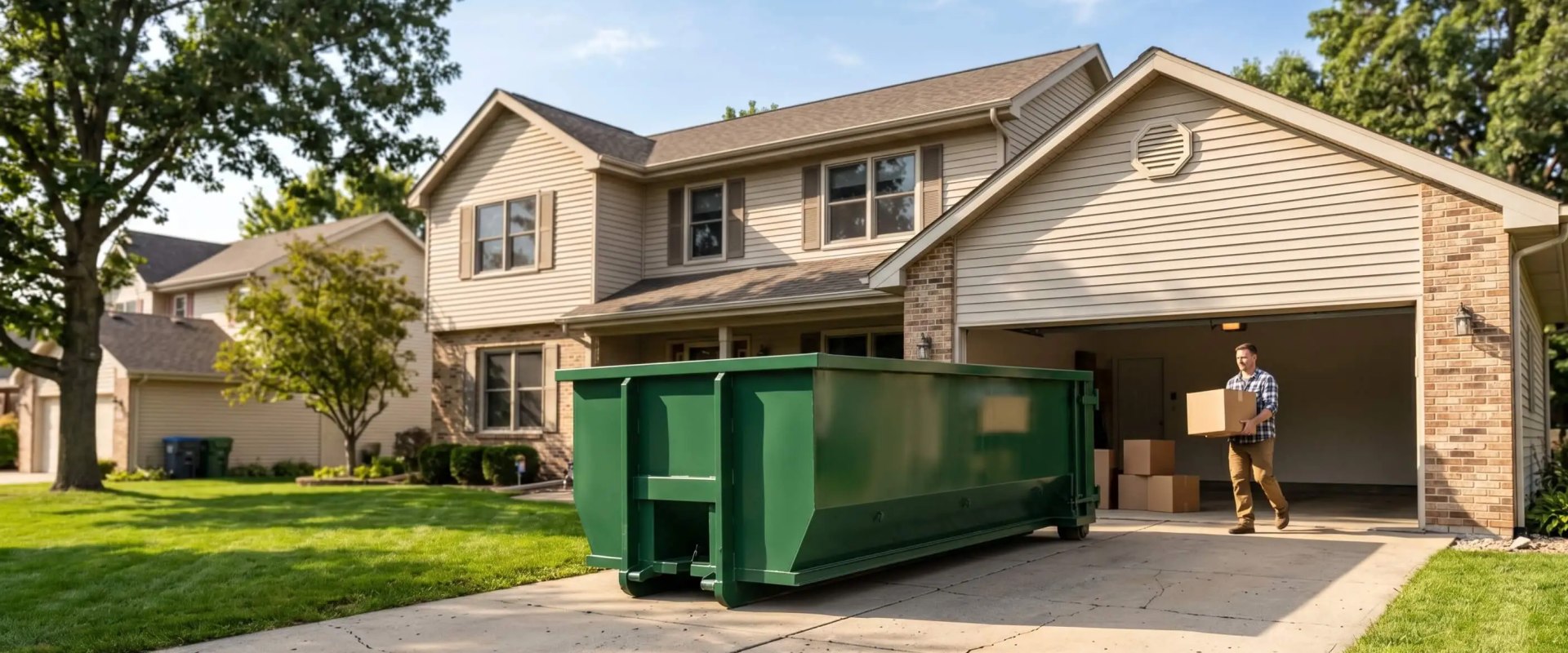
10-yard dumpster (most common first-time choice): $220–$500, 2–3 ton limit. Best for garage cleanouts, small basements, single-room remodels, or roofing tear-offs.
15-yard dumpster: $265–$620, 2–3 ton limit. Best for multi-room cleanouts or small deck demolition.
Most common surprise charge: weight overage at $40–$200 per ton. Roofing shingles, concrete, and dirt fill the weight allowance faster than first-timers expect.
Other fees to ask about upfront: daily extension ($5–$15/day), street-placement permit ($10–$100+), prohibited-item surcharges (mattresses, tires, electronics, paint, batteries), and dry-run fees ($50–$150).
Unique insight: the lowest base rate is rarely the lowest final invoice. A $250 quote with a 1-ton weight allowance costs more than a $310 quote with a 3-ton allowance the moment you toss in shingles or concrete. Always ask each provider for the weight allowance in tons, not just the price, before booking.
Top Takeaways
$220 to $500 is the realistic range for a 7- to 10-day rental of a 10-yard small dumpster. The national average sits around $320–$385.
Get three written, itemized quotes — base rate, weight allowance, daily extension, prohibited items — before booking.
Ask the weight question. Overage fees of $40–$200 per ton are the single most common surprise charge.
Permit if you're using a public street. Most cities require it for street placement; driveway placement does not.
Check the prohibited-item list. Mattresses, tires, electronics, paint, batteries, and refrigerant appliances often carry surcharges.
Match rental period to project. Don't book 14 days for a weekend project; daily extensions are cheaper than overbooking.
Compare against junk removal. If you have a few bulky items rather than full-volume debris, junk removal may cost less.
What a Small Dumpster Rental Should Cost
Quick-Answer Price Breakdown
Dumpster bag — $130–$200 for a 7-day rental, roughly 1 ton weight limit. Best for single-room cleanouts or small bath remodel debris.
10-yard dumpster — $220–$500 for a 7-day rental, 2–3 ton weight limit. The most common first-time choice. Best for garage cleanouts, small basements, single-room remodels, or roofing tear-offs.
15-yard dumpster — $265–$620 for a 7-day rental, 2–3 ton weight limit. Best for multi-room cleanouts, small deck demolition, or mid-size landscaping projects.
Ranges reflect 2026 national medians from published cost guides; actual quotes vary by zip code, season, debris type, and disposal-facility tipping fees. Always get itemized written quotes from at least three providers.
What's Included in That Base Rate
A small dumpster rental quote typically bundles four things: delivery to your driveway, a set rental period (usually 7–10 days), a weight allowance (usually 1–3 tons), and pickup with disposal at the facility. That's it. Anything outside those four items is an add-on, and add-ons are where first-timers get surprised.
The Six Fees First-Time Renters Miss
Weight overage fees — $40 to $200 per ton over your included allowance. Roofing shingles, concrete, brick, and dirt all hit weight limits fast.
Daily extension fees — $5 to $15 per day past your rental period. A weekend project that creeps into Wednesday adds up.
Permit fees — $10 to $100+ if the dumpster sits on a public street rather than your driveway. Required by most municipalities.
Prohibited-item surcharges — $10 to $75+ each for mattresses, tires, electronics, paint, batteries, and appliances with refrigerant.
Mixed-load surcharges — clean concrete, clean dirt, or clean yard waste loads cost less than mixed debris. Sorting saves money on big projects.
Trip / dry-run fees — $50 to $150 if the driver can't deliver or pick up because of a parked car, low tree branches, or blocked access.
None of these fees are dealbreakers — they're predictable. The renters who get burned are the ones who didn't ask. The renters who get a clean invoice are the ones who asked every provider to itemize the base rate, the weight allowance in tons, the daily extension rate, and the prohibited-item list before booking.
Small Dumpster vs. Junk Removal Service
First-time renters often default to a dumpster when junk removal would be cheaper, or vice versa. The simple rule of thumb: dumpsters are cheaper per cubic yard for self-loaded large-volume projects (think garage cleanout, full deck demo, multi-room remodel debris). Junk removal is cheaper when you have a few bulky items, no time, no labor, or no driveway space. For a deeper breakdown of how the junk removal model works, see our companion guide on how junk removal actually works step by step.
"After years covering home-services categories — from junk removal to garage cleanouts to foreclosure cleanout pricing for first-time investors — the same pattern shows up in every dumpster-rental story we've documented: the people who got the worst final invoices weren't the ones with the biggest projects. They were the ones who never asked the weight question. If you ask one question on the call before you book a small dumpster, make it this one: 'What's the included weight allowance, and what does it cost per ton if I go over?' That single question separates the $300 invoices from the $550 ones. Roofing shingles, concrete chunks, and dirt look like nothing in a 10-yard container, and most first-time renters don't realize they've blown past two tons until the bill arrives.”
7 Essential Resources
These are the references we lean on when researching dumpster rental costs and debris-disposal regulations. All are major published cost guides, government sources, or industry references.
Angi — How Much Does It Cost to Rent a Dumpster? (2026 Data). National average ($385), typical range ($294–$480), and a fee breakdown including overage charges. angi.com
HomeGuide — 2026 Dumpster Rental Prices. Detailed weekly pricing by yard size from 2-yard to 40-yard, plus daily and monthly rate breakdowns. homeguide.com/costs/dumpster-rental-prices
Dumpsters.com — Roll-Off Dumpster Cost Guide (Updated April 2026). Industry-published price grid by size and project type, with average ranges based on real customer rates. dumpsters.com/pricing
EPA — Sustainable Management of Construction and Demolition Materials. Federal guidance on what counts as construction & demolition (C&D) debris and how it's handled at disposal facilities. Useful context on prohibited-item rules and tipping fees. epa.gov/smm
Wikipedia — Roll-off Dumpster. Definitional reference for the standard residential rental container, including size and design specifications. wikipedia.org/wiki/Roll-off_(dumpster)
Budget Dumpster — Complete Guide to Dumpster Rental Prices. Hauler-published explanation of flat-rate vs variable pricing, weight limits, trip fees, and cancellation policies. Useful for understanding the structure of a quote. budgetdumpster.com/pricing
Fixr — Dumpster Rental Cost Guide. Independent cost-data publication with national averages, residential vs commercial breakdowns, and provider-by-provider price comparisons. fixr.com/costs/dumpster-rental
3 Statistics
$385 is the national average for a 7-day dumpster rental in the United States, with most homeowners paying between $294 and $480. Small 10-yard containers sit at the low end of that range; larger sizes drive the upper end. Source: Angi, How Much Does It Cost to Rent a Dumpster? (2026 Data) — angi.com
Weight overage fees of $40 to $200 per ton are the most common surprise charge on small dumpster invoices. A 10-yard container's typical 2–3 ton allowance fills faster than first-time renters expect when the load includes shingles, concrete, brick, or dirt. Source: ZTERS dumpster rental cost guide — zters.com
600 million tons of construction and demolition (C&D) debris are generated in the United States each year — more than twice the volume of municipal solid waste. That scale is why disposal-facility tipping fees are the single largest variable in regional dumpster rental pricing, and why prices can shift 12% or more between zip codes. Source: U.S. Environmental Protection Agency — epa.gov C&D debris data
Final Thoughts and Opinion
Here is the honest opinion this guide has been building toward: most first-time renters overpay for a small dumpster by $50 to $200, and almost all of it comes from one mistake — not asking about weight, fees, or the permit before booking. The dumpster industry is not predatory. It is just unfamiliar. The base rate is fair. The overages are real. Both are knowable in advance.
Our position is unambiguous: get three written, itemized quotes before booking your first small dumpster. The same 10-yard container can vary $150 between providers in the same zip code, and the lowest base rate isn't always the lowest final invoice once you account for weight allowance differences. The provider who quotes $250 with a 1-ton limit is more expensive than the provider who quotes $310 with a 3-ton limit if you're tossing anything heavier than household junk.
First-time projects are also small projects, which means a 10-yard container is almost always the right size. Resist the upsell to 15- or 20-yard. The savings on going one size up are smaller than first-time renters think, and most one-room cleanouts genuinely fit in a 10-yard. If you're truly between sizes, size up — a single overage fee costs more than the difference between a 10 and a 15. But that's the only case where larger is the right call.
Frequently Asked Questions
How much does it cost to rent a small dumpster for a weekend project?
For a 10-yard container over a 7-day rental window (the smallest common period), expect $220 to $500 nationally, averaging closer to $320–$385. Most providers don't offer two- or three-day rates because their cost structure is built around the standard week. Booking a 7-day window for a weekend project is normal and won't cost extra if you finish early.
Do I need a permit to put a dumpster in my driveway?
Generally no — a dumpster sitting fully on private property doesn't typically require a permit. If any portion sits on a public street, sidewalk, or right-of-way, most municipalities require a street-placement permit costing $10 to $100. Always check your local public works office before delivery; some HOAs also impose placement and time-limit rules.
What can I not put in a small dumpster?
Common prohibited or surcharged items include: hazardous materials (paint, solvents, asbestos), batteries, tires, electronics, appliances containing refrigerant or compressors, mattresses (in many jurisdictions), and medical waste. Each provider publishes its own list — ask for it in writing before booking. Disposal facility rules and EPA C&D handling guidance govern much of this and vary by region.
How long can I keep a small dumpster?
Standard rental periods run 7 to 10 days. After that, expect a daily extension fee of $5 to $15. Monthly rentals are common for renovation projects and run $500 to $1,200 depending on size and provider. If you know upfront that the project will run 14+ days, ask for a monthly quote rather than extending a weekly rental — it's almost always cheaper.
Is a small dumpster cheaper than hiring junk removal?
It depends on the project. For self-loaded, full-volume debris (multi-room cleanouts, demolition debris, big yard projects), a small dumpster is almost always cheaper per cubic yard. For a few bulky items — a couch and a treadmill, say — junk removal usually wins because you're paying for labor and a single trip rather than a full container. For deeper detail, see our guide on how junk removal actually works step by step.
Your Next Step
If you're about to book your first small dumpster, take ten minutes to call three providers, ask about weight allowance and prohibited items, and get the quotes itemized in writing. That single step saves first-time renters $50 to $200 on average.
Ready to compare your local quotes against published industry pricing? Click here to view a current small and roll-off dumpster rental cost guide — use it as a benchmark when reviewing the prices you're being quoted. If a local provider's number is well above the published range without itemizing why, that's your signal to keep calling.
Bookmark this page or share it with anyone planning a first cleanout, renovation, or yard project. The right questions, asked before you book, are the difference between a clean $300 invoice and a $550 surprise.