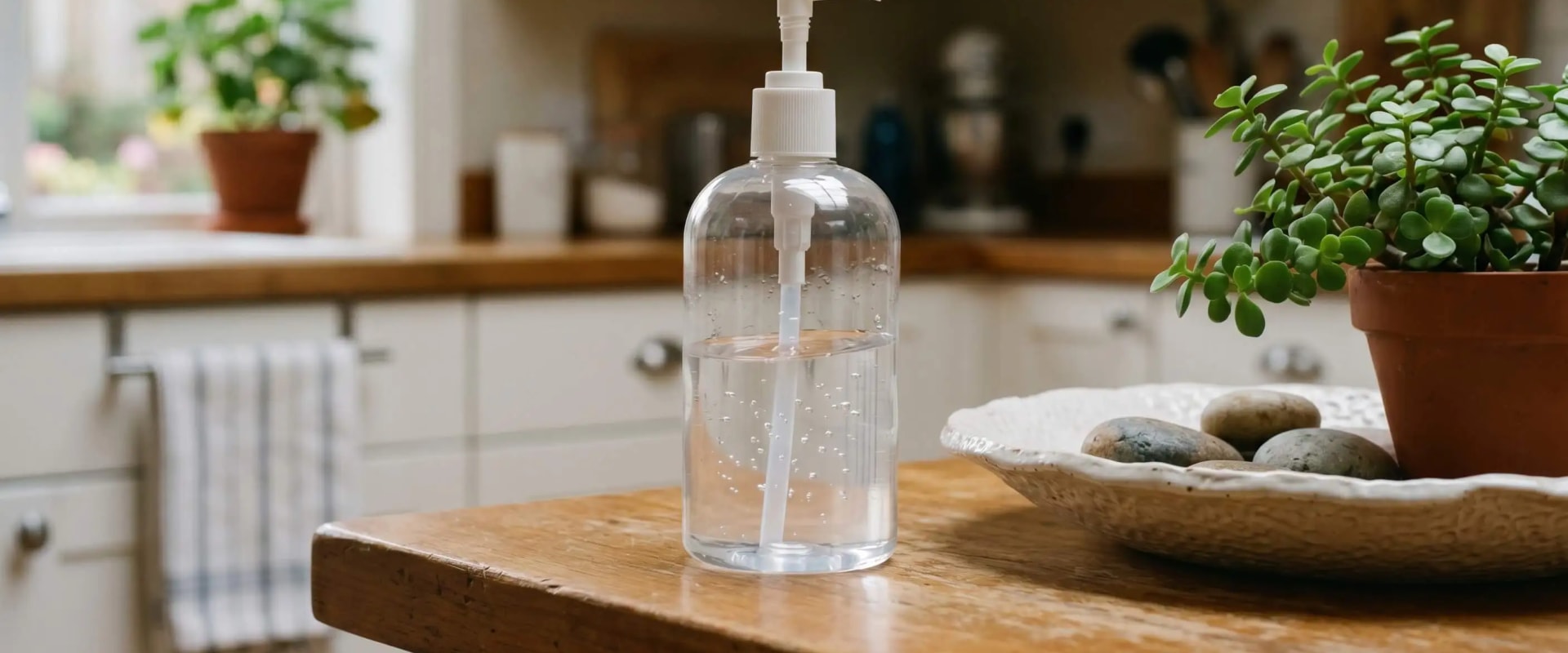
I started leaving the empty sanitizer bottles on a kitchen shelf last March, mostly out of curiosity. I wanted to see how many we actually went through in a year. By August the shelf held fourteen of them, and that count is what finally pushed me to look for a hand sanitizer alternative that didn't add to the pile.
Plenty of readers end up at this same point through different doors: dry skin that won't quit, a toddler who keeps getting into the bottle, or the slow realization that single-use plastic has crept back into a house otherwise free of it. The eco-friendly side of the category has gotten genuinely more practical in the last two years.
Here's what's worth knowing if you're trying to make the same change.
TL;DR Quick Answers
What is the best hand sanitizer alternative?
• Best overall: Waterless soap in a refillable bottle for on-the-go, paired with a bar or refillable foam soap at home.
• Best for low-waste living: Solid soap bars or concentrate-and-dilute formulas in compostable packaging.
• Best for sensitive skin: Plant-based, fragrance-free formulas certified by EPA Safer Choice or rated low-hazard by EWG.
• Best for travel: A small refillable bottle of plant-based foaming hand cleaner.
• What to look for on the label: Refillable packaging, plant-based or biobased ingredients, no synthetic fragrance, and a credible third-party certification.
Top Takeaways
• Soap and water is the default. Hand sanitizer alternatives are for when a sink isn't available.
• Eco-friendly options cut single-use plastic and synthetic fragrance while being gentler on skin.
• Look for refillable packaging, plant-based ingredients, and certifications from EPA Safer Choice or USDA BioPreferred.
• Waterless soap is the most practical on-the-go alternative for everyday use.
• For high-risk situations like illness in the household, alcohol-based sanitizer is still the better choice.
Why So Many People Are Rethinking Hand Sanitizer
Conventional hand sanitizers do one job well. They kill surface germs on dry skin in about 20 seconds without water, which is hard to beat in airports, on the trail, after the gym, or anywhere a sink is twenty minutes away. The trade-offs only show up once you start using them daily.
Packaging is the most visible one. Most sanitizers come in single-use plastic bottles, and the personal care category churns out a steady stream of small, hard-to-recycle containers. Counting the empties from one household over a year is grimmer than most people expect.
The formula itself is the second concern. Standard sanitizer relies on alcohol, usually ethanol or isopropyl, at 60% to 95% concentration, sometimes blended with synthetic fragrance and dyes whose quality varies wildly. Wikipedia's overview of hand sanitizer is a solid primer if you want to understand how the active ingredients actually disinfect. Repeated use of high-alcohol formulas strips the skin barrier, leaving it more vulnerable to the germs you were trying to avoid.
Most marketing copy also skips the inconvenient part: hand sanitizer was never meant to replace soap and water. The CDC has been clear on this for years. Soap is the better default whenever a sink is reachable. Sanitizer is the fallback for when one isn't.
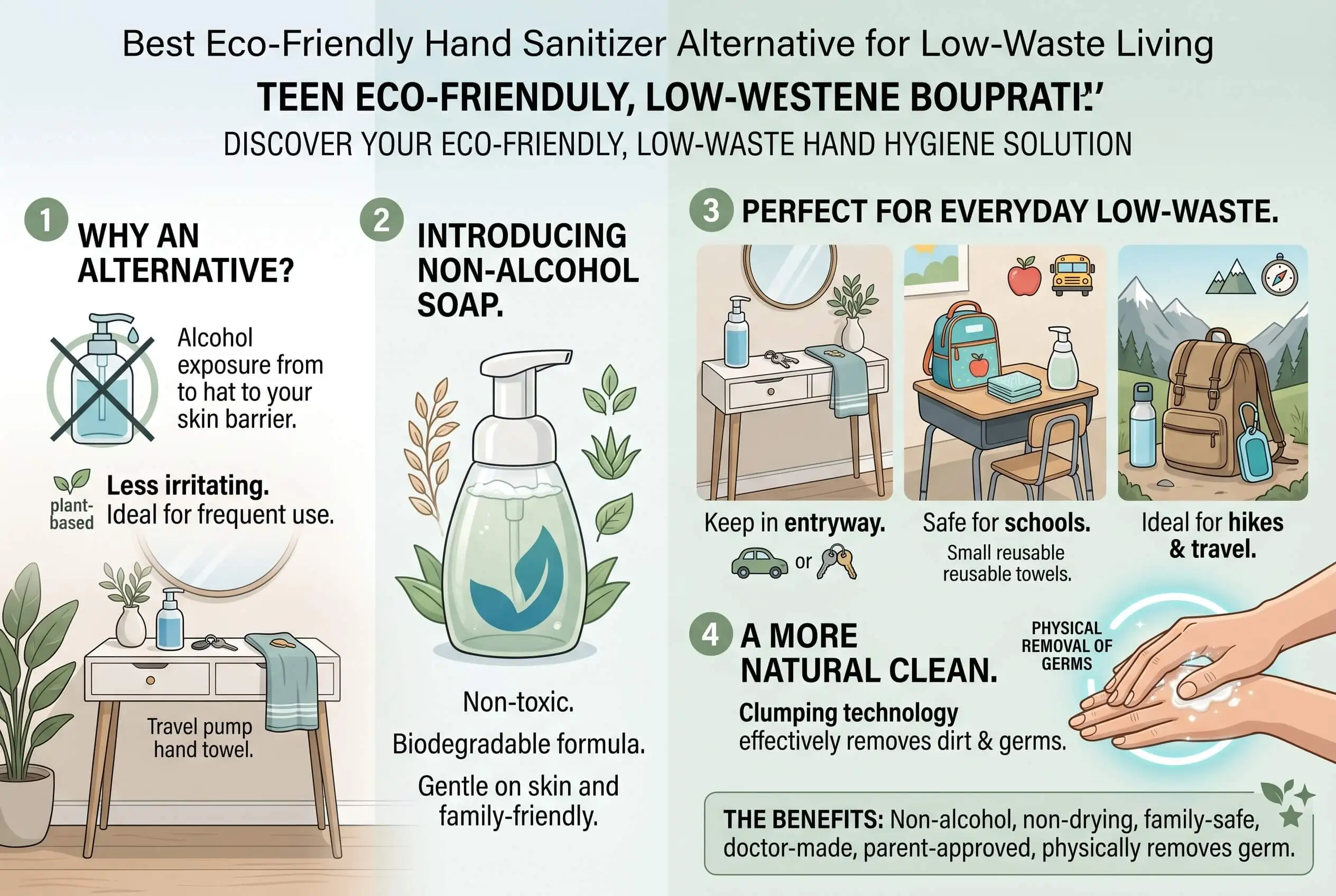
So what does an eco-friendly hand sanitizer alternative actually look like in practice? It's any cleaning method or product that gets your hands clean, cuts packaging waste, and treats your skin better than a 70% alcohol gel does. That can mean a bar of solid soap, a refillable waterless soap, a biodegradable foam in compostable packaging, or just better habits around the regular washing you're already doing. Nowata's waterless soap is one example that's earned attention in the low-waste community for its compact, refillable format. The drugstore aisle isn't the whole menu.
“ In my experience covering home services and household routines, the families who switched away from drugstore sanitizer rarely did it for one reason. They hit a tipping point, and the tipping point was always personal: a toddler who kept getting into the bottle, a teenager whose knuckles split open by November, a sanitizer subscription on the credit card statement that finally looked ridiculous.”
7 Essential Resources
When I'm vetting a new product or evaluating a category, I keep coming back to the same handful of sources. These are the references worth bookmarking before you spend money on anything.
• CDC: When and How to Wash Your Hands. The baseline. Read this once and you'll see why soap and water beats sanitizer in most home situations, and when sanitizer is genuinely the right call.
• WHO: Hand Hygiene. The global guidelines, useful for the public-health context behind the decisions you make at home.
• FDA: Safely Using Hand Sanitizer. The regulatory baseline. Spells out what hand sanitizer is, what it isn't allowed to claim, and what to look for on a Drug Facts label.
• EPA Safer Choice. A searchable directory of household and personal care products that meet the EPA's safer-ingredient criteria. Hand soaps are in scope, and the certification means the formula has been screened for human and environmental impact.
• USDA BioPreferred Program. The federal program that certifies bio-based products, meaning items derived from renewable plant or biological materials instead of petroleum. Worth checking when you want to verify a label claim about plant-based content.
• EWG Skin Deep. The Environmental Working Group's database of personal care product ratings. Type in any product name to see a hazard score plus its ingredients of concern. Not infallible, but a fast first check.
• Plastic Pollution Coalition Resource Library. Reports, guides, and primers that go well beyond the hand-hygiene question. Useful if you want the broader context on why low-waste packaging matters.
Bookmark two or three of these and you'll have a working filter for almost any cleaning or hygiene product you're considering buying.
3 Statistics
Numbers help cut through the marketing noise. These three give a sense of where the category is moving and why the alternative-products conversation is worth having now.
• 1.7 billion people still lacked basic hand hygiene services at home in 2024, according to WHO and UNICEF. Most readers of this article aren't in that group, but the figure is the global context for every household choice we make about hand hygiene.
• The global hand sanitizer market was valued at USD 7.04 billion in 2023 and is projected to reach USD 10.84 billion by 2030, per Grand View Research. That growth is happening alongside a parallel rise in demand for plant-based, low-waste alternatives, which is the entire reason categories like waterless soap exist.
• 74% of American consumers say organic ingredients are important to them in personal care products, based on a 2024 NSF survey reported by Precedence Research. The demand signal is real, and it's why even mainstream brands are reformulating now.
Final Thoughts and Opinion
If someone asked me to pick one default for a household making the switch, I'd point to a refillable, plant-based foam soap kept by every sink, plus a small refillable bottle of waterless soap or low-waste sanitizer for the bag. That setup handles roughly 90% of daily hand-cleaning needs at a fraction of the packaging waste, and it's gentler on skin than the standard 70% alcohol gel.
I'll be honest about where alternatives still fall short. Anywhere clinical-grade disinfection actually matters — a hospital, a long flight after touching every surface in the seatback, or a household where norovirus is going around — alcohol-based sanitizer is still the right tool. The eco-friendly options work for everyday life. They aren't built for clinical sterilization.
The direction this category is heading is encouraging. Refill stations have started appearing in mainstream grocery chains, concentrate-and-dilute formulas have meaningfully improved, and the price gap between conventional and low-waste options is narrower every year. Buying an alternative is no longer the premium choice it was even two years ago. Within another two, it'll be the obvious one for most households.
Frequently Asked Questions
What can I use instead of hand sanitizer?
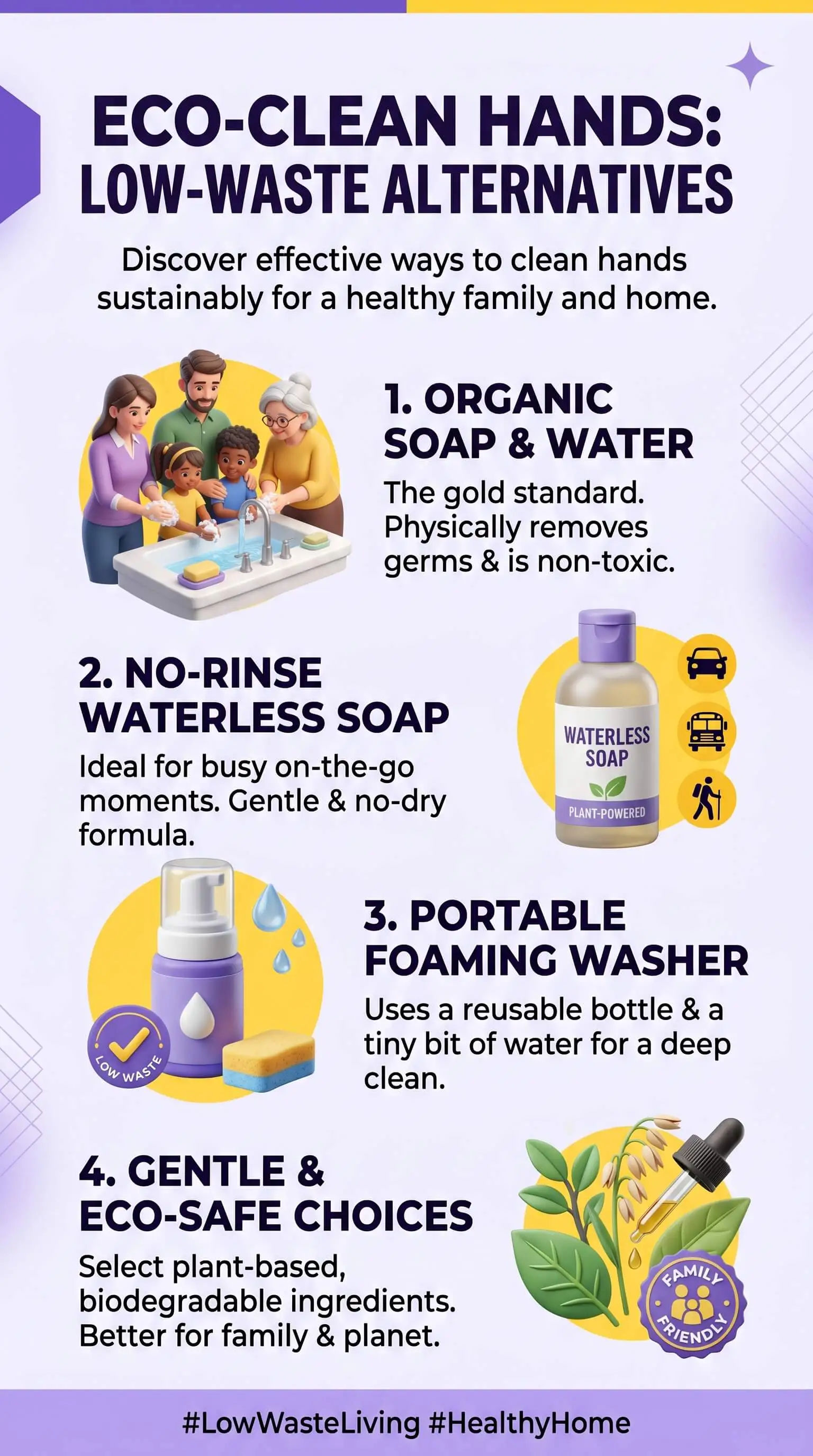
The most effective replacement is plain soap and water for at least 20 seconds whenever a sink is available. When you're on the move, the best alternatives are waterless soap (which doesn't need rinsing), plant-based foaming sanitizers in refillable bottles, or biodegradable hand wipes. Pick based on where you'll actually use the product, not which one looks best on the shelf.
Is soap and water better than hand sanitizer?
Yes, in most everyday situations. The CDC recommends soap and water as the first choice because it physically removes germs, oils, and grime. Sanitizer only kills certain microbes on the surface of dry skin. Soap and water also handles things sanitizer can't, like norovirus and many chemical residues. Sanitizer is the right tool when no sink is reachable.
Are alcohol-free hand sanitizers actually effective?
Some are, some aren't. Alcohol-free formulas typically use benzalkonium chloride or similar quaternary ammonium compounds as the active agent. These work against many common bacteria but tend to be less reliable against viruses than 60%+ alcohol formulas. Look for products that specify the active ingredient and concentration on the label. If they don't, that's a red flag.
What is the most eco-friendly hand sanitizer alternative?
A bar of solid soap or a refillable waterless soap stored at the sinks you use most. Both come in minimal or compostable packaging, last longer per ounce than liquid sanitizer, and produce far less plastic waste. Pair either with one small refillable bottle for travel and you've eliminated almost all the single-use plastic in your hand-cleaning routine.
Does waterless soap work as well as hand sanitizer?
For everyday cleaning (grease from a bike chain, food residue, the general grubbiness of a long day), waterless soap actually works better than sanitizer because it lifts and removes contaminants instead of just killing surface microbes. For sterilization in a clinical or post-illness situation, alcohol-based sanitizer is still more reliable.
Can I make a natural hand sanitizer alternative at home?
You can mix isopropyl alcohol, aloe vera gel, and a drop of essential oil in roughly a 2:1 ratio for a basic homemade sanitizer, but the FDA warns that DIY formulas often miss the 60% alcohol threshold needed to actually disinfect. For routine hand cleaning, a homemade liquid soap diluted from castile soap concentrate is a more reliable low-waste DIY route.
Are eco-friendly hand sanitizer alternatives safe for kids?
Most plant-based, fragrance-free formulas are gentler on children's skin than conventional alcohol gels, and that matters because kids wash and sanitize their hands frequently throughout the day. For sensitive or eczema-prone skin, pair an alternative with a sulfate-free hand soap option at home. Always supervise younger children with any alcohol-based product to prevent accidental ingestion.
Ready to Make the Switch?
Start small. Pick one sink in your house, swap out whatever's there for a refillable low-waste option, and live with it for a full month before deciding if it's working. The routine usually shifts before the product itself runs out, which is the part most readers tell us they didn't expect.
If you're rethinking other hygiene routines too, take a look at our guide on eco-friendly disposal practices for everyday cleaning products. And if you've already made the switch, leave a comment with what's worked. The recommendations from this community have shaped half of what we publish.