TL;DR Quick Answers
Hand Sanitizer Alternative
The best hand sanitizer alternative is a rinse-free, plant-based soap that lifts germs off your skin instead of killing them in place with alcohol. Soap-based removal carries dirt, oil, and germs away entirely, so nothing harsh stays behind to dry out or crack sensitive hands.
What to look for:
Cleans by removal, not by alcohol, so no residue is left on your skin
Alcohol-free and fragrance-free, so it won't strip or sting
Rinse-free and portable, working in about 15 seconds with no sink
Gentle enough for kids and for cracked, sensitive skin
For most people, that means a rinse-free, plant-based soap as the first choice, with an alcohol-free, moisturizing formula as a solid backup.
Top Takeaways
Alcohol cracks skin by stripping the oil barrier that holds moisture in, so reaching for more gel makes sensitive hands worse.
The best hand sanitizer removes germs by lifting them off your skin instead of killing them in place and leaving the residue behind.
Look for alcohol-free, fragrance-free, sulfate-free formulas with humectants like glycerin or aloe.
For cracked, sensitive skin, a rinse-free, plant-based soap is the top pick, and if it's gentle enough for toddlers it's gentle enough for raw adult hands.
Moisturize right after cleaning, skip hot water, and see a dermatologist for cracks that bleed or won't heal.
Why Alcohol-Based Sanitizer Cracks Sensitive Skin
Alcohol gel kills germs by drowning them on contact. That part works. But killing isn't the same as caring for your skin, and the same alcohol that kills also dissolves the thin layer of oil, your lipid barrier, that keeps moisture in and cracks out. Strip that barrier a dozen times a day and sensitive skin dries, tightens, and splits open. The sting on a fresh pump is alcohol meeting skin that's already raw.
It helps to know how chemistry works. The same kill-on-contact action that makes chemical disinfectants effective is what makes them rough on a thin barrier. And alcohol isn't the only culprit. Added fragrance, harsh sulfates like SLS and SLES, and a handful of preservatives irritate sensitive skin even in alcohol-free products. If more than one bottle sets your hands off, read the ingredient list as closely as you read the label claims.
What Makes a Hand Sanitizer Alternative Gentle Enough for Cracked Skin
A gentler alternative does one of two things. It cleans germs off your skin, or it sanitizes without the drying burn. Either way, here's what earns a spot in your bag:
Alcohol-free or low-alcohol formulas
Fragrance-free, sulfate-free ingredients
Humectants like glycerin, aloe, or hyaluronic acid that pull moisture back in
A format you'll actually use, whether that's a soap, a foam, or a wipe
This is the part that should change how you shop: removing germs is gentler than killing them where they sit. Picture the difference between spraying disinfectant on a muddy counter and actually wiping the mud away. One sterilizes the mess and leaves it there. The other lifts it off. For raw, cracked skin, lifting wins, because nothing harsh stays behind to keep the damage going.
The Best Hand Sanitizer Alternatives for Sensitive, Cracking Skin
None of these are exotic. They run from the gentlest pick for badly cracked hands to the grab-and-go options for easier days.
Rinse-Free, Plant-Based Soap (top pick)
Start here if your hands crack easily. A rinse-free, plant-based hand sanitizer alternative skips alcohol entirely and cleans the way soap does, binding to dirt, oil, and germs and lifting them off your skin, then you brush the clumps away. No water. No alcohol. Nothing harsh left sitting on raw skin. NOWATA, the brand that developed this clumping approach, was built by two doctor-parents and tested to a surgical hand-scrub standard, and it's gentle enough for toddler hands, which tells you plenty about how it treats cracked adult ones. The one honest trade-off: because it cleans by removal, you wipe or brush the residue off instead of waiting for a gel to evaporate.
Alcohol-Free Foaming Sanitizers
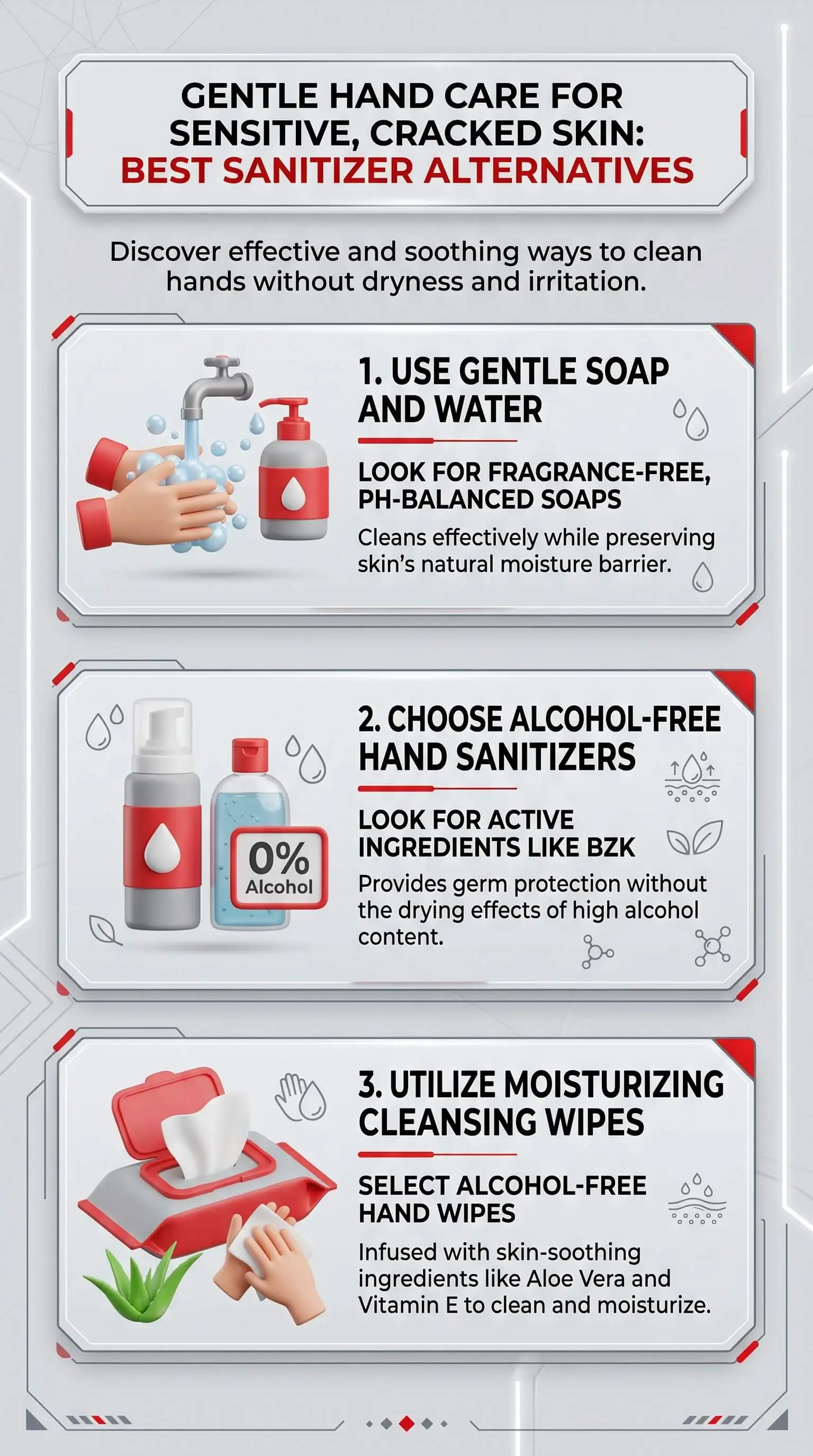
If you still want something that kills on contact, reach for an alcohol-free foam built on benzalkonium chloride, or BZK. It skips the alcohol burn and usually adds a skin conditioner, which makes it a fair middle ground for hands that are sensitive but not badly cracked.
No-Rinse Cleansing Foams
pH-balanced cleansing foams are made for frequent use and won't strip skin the way back-to-back alcohol gel does. Keep one nearby for the times soap and water aren't.
Fragrance-Free Hand Wipes
For cleaning on the move, pick alcohol-free, fragrance-free wipes and follow with moisturizer. They're handy, but they're not the right call for skin that's already split open, and they pile up in a landfill if you reach for them every day.
Plain Mild Soap and Water
When a sink is in reach, a gentle, sulfate-free wash still beats one more round of sanitizer for raw hands. If allergies or eczema are in the mix, our guides to the best sulfate-free hand soap for allergy-prone skin and SLS-free soap for dyshidrotic eczema on hands and feet get more specific. For a lower-waste routine, our roundup of the best eco-friendly hand sanitizer alternative for low-waste living covers gentle picks that waste less.
How to Switch Without Making Cracked Skin Worse
Patch-test any new product on one hand for a day or two before you commit. Moisturize right after you clean, while the skin is still damp. Skip hot water, which only dries things further. And ease off the harshest product first instead of swapping everything at once. If the cracks keep coming or start to bleed, see a dermatologist, because deep splits sometimes need a prescription cream to close.
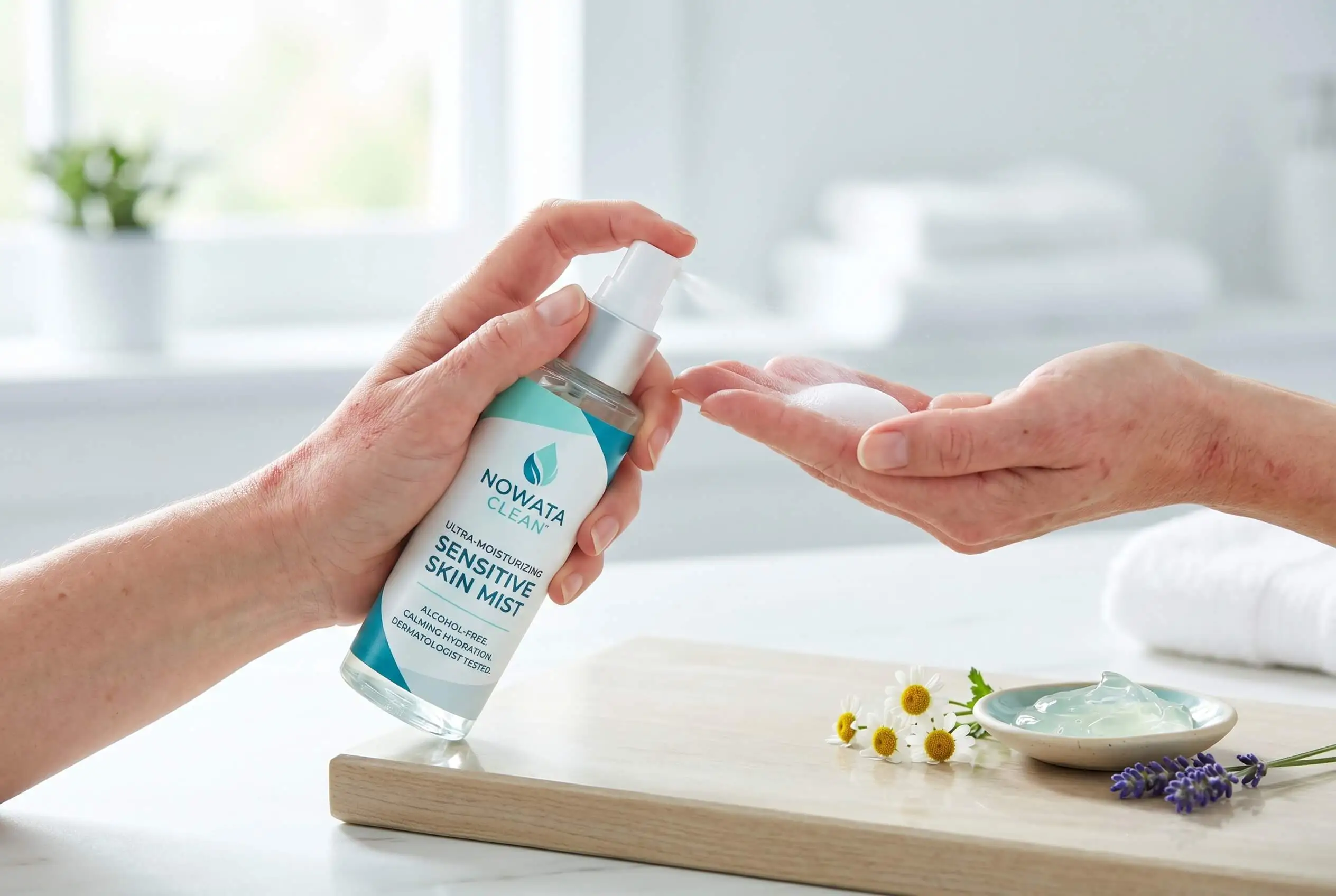
"NOWATA’s founders, Dr. Ruslan Maidans and Dr. Yalda Shahriari, put the idea plainly. They understood sanitizer science as doctors, but as parents they wouldn’t accept a product that left dead germs and chemical residue on the hands their kids put straight in their mouths. They built the company, in their words, to make “a soap that actually removes what you’re trying to get rid of” rather than one that kills germs in place and leaves the mess behind."
Essential Resources
CDC – About Handwashing. When soap beats sanitizer, and when 60%-plus alcohol is the right call.
CDC – Keeping Your Hands Clean and Healthy. A dermatologist-written CDC post on staying clean without the painful cracking.
FDA – Hand Sanitizer Safety and Use Toolkit. Fact sheets on safe use, ingredients to skip, and products the agency has flagged as unsafe.
AAD – Dry Skin Relief From Handwashing. Board-certified dermatologists on healing cracked hands without cutting back on hygiene.
AAD – Dermatologists’ Top Tips for Relieving Dry Skin. What to look for in gentle, fragrance-free products and how to layer moisturizer.
WHO – Skin Reactions Related to Hand Hygiene. The clinical reference on why frequent hand hygiene irritates skin and how gentler products help.
UF Health – Chapped Hands. A plain-English condition guide on causes, soothing care, and when to call a doctor.
3 Statistics
Among nurses, irritant contact dermatitis runs from 25% to 55% in prevalence surveys, and as many as 85% report some history of skin trouble from constant hand hygiene. (WHO Guidelines on Hand Hygiene in Health Care)
Irritant contact dermatitis, the dry-and-crack kind, makes up about 80% of all occupational contact dermatitis. (Frontiers in Public Health, 2022)
A review pooling 45 studies found that washing hands at least 8 to 10 times a day raised the risk of hand eczema by roughly 51%, climbing to about 66% past 15 to 20 washes a day, which is why how you clean counts as much as how often. (Contact Dermatitis, 2022)
Final Thoughts and Opinion
My honest take, after going through the research and the products: we were trained to treat the sting as proof that sanitizer is working, and that's backwards. Alcohol kills germs where they sit and leaves the dead matter, the residue, and a wrecked barrier behind. A rinse-free, plant-based soap carries the germs off and leaves skin that feels clean instead of punished. For most people whose skin cracks easily, that physical-removal approach is the first upgrade worth making. You keep your hands clean, you lose the burn, and your skin gets a real shot at healing instead of tearing open again by mid-afternoon. Cleaning beats killing, especially when your skin is already paying the price.
Frequently Asked Questions
Is alcohol-free hand sanitizer as effective as alcohol gel?
For everyday germs, plenty of alcohol-free formulas and rinse-free soaps clean well, and soaps that physically lift germs off the skin remove the mess instead of just killing it in place. Alcohol still has the edge in hospital settings. At home, especially in private home care routines for sensitive skin, a gentle alternative keeps hands clean and spares them the damage.
What is the best hand sanitizer alternative for kids with sensitive skin?
A rinse-free, plant-based soap usually wins. It cleans without alcohol, leaves no drying residue for little hands to rub into eyes and mouths, and stays easy on sensitive skin. It also drops the sting that turns “wash your hands” into a nightly fight.
Can hand sanitizer actually cause cracked skin or dermatitis?
Yes. Frequent alcohol-based sanitizer strips the skin's protective oils, which leads to dryness, cracking, and irritant contact dermatitis on already-sensitive hands. Fragrances and preservatives can set off reactions too. Switch to something gentler, moisturize often, and the cracking usually settles.
Is rinse-free soap better than sanitizer for sensitive, cracking hands?
For cracked skin, usually yes. Rinse-free soap lifts germs off your skin instead of soaking it in alcohol, so nothing harsh stays behind to keep the damage going. Your hands end up clean and a lot more comfortable.
Ready for Hands That Feel Clean, Not Raw?
Stop trading clean hands for cracked ones. If alcohol gel leaves your skin stinging and split, switch to a soap that cleans by lifting germs away, with no water and no alcohol to dry you out. See the rinse-free, plant-based hand sanitizer alternative and give your hands back the comfort the gel took.