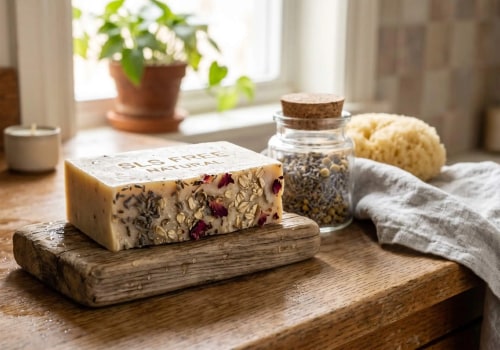
Castile soap earned its reputation, and it's earned right up until you have reactive skin. Its high pH strips more than dirt, and that's a real trade-off, not a flaw anyone puts on the label. Fortunately, environmentally friendly soap for camping now comes in more skin-conscious formats, including biodegradable wipes, concentrated bars, and rinse-free formulas that are easier to pack and use responsibly outdoors. These options can reduce plastic waste, simplify cleanup, and help campers limit their impact when used correctly. “Natural” still doesn't guarantee gentleness, but clearer ingredient lists and credible certifications make it easier to compare products and choose one that suits both your skin and the environment. Here's what actually matters when you check the ingredients, compare formats, and figure out which certifications are worth trusting.
TL;DR Quick Answers
Environmentally Friendly Soap for Camping
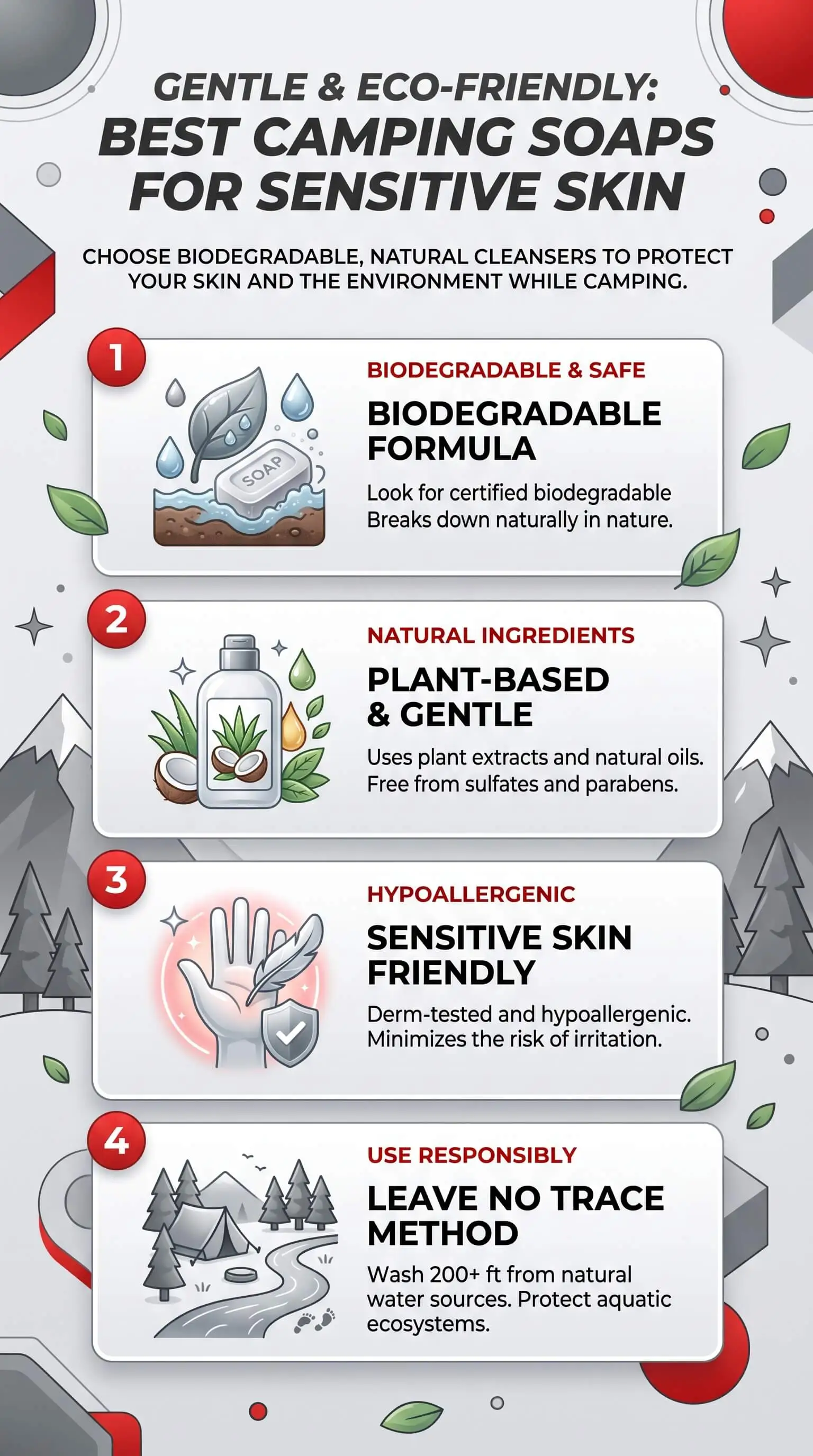
The most environmentally friendly camping soap is plant-based, fragrance-free, and backed by a verified biodegradability standard like OECD 301, not just the word "biodegradable" printed on the bottle.
Plant-based ingredients, not petroleum-derived surfactants
No SLS/SLES, dyes, or added fragrance
A named third-party standard behind the claim, such as OECD 301, EPA Safer Choice, or USDA BioPreferred
Used at least 200 feet from any lake or stream, per Leave No Trace guidelines, even when genuinely biodegradable
Top Takeaways
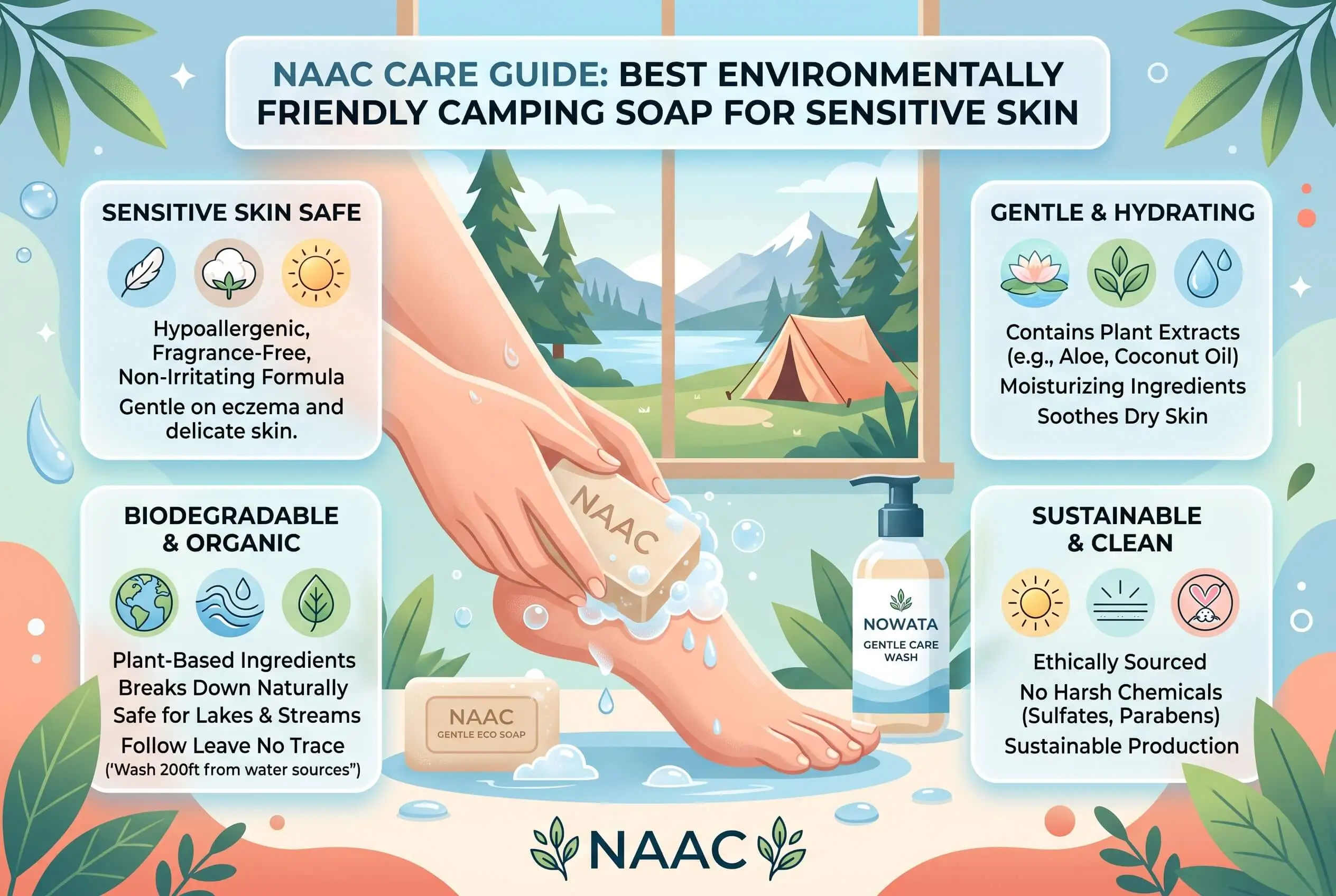
“Sensitive skin friendly” for camp soap means fragrance-free, low pH, no SLS/SLES, and no dyes. It doesn't mean “natural.”
Castile soap is versatile and widely available, but its alkalinity can be too harsh for reactive skin without heavy dilution.
A “biodegradable” label means nothing without a verified test behind it. True biodegradation depends on soil microorganisms, oxygen, and time, conditions a landfill or waterway doesn't reliably provide.
Biodegradable soap still needs proper disposal. Wash at least 200 feet from any lake or stream.
Rinse-free, waterless formulas are a newer format worth comparing against traditional liquid and bar soap if fragrance or residue is the concern.
Most traditional camp soaps, castile included, sit on the alkaline end of the pH scale. Skin's natural barrier prefers a mildly acidic range, so an alkaline soap can strip your skin's oils fast, sometimes within a few washes. Stack a strong scent on top, tea tree and peppermint are common culprits, and you've combined two irritants in one bottle. Foaming agents like sodium lauryl sulfate (SLS) and sodium laureth sulfate (SLES) turn up in a lot of “eco” soap sheets and concentrates too, and both commonly aggravate eczema-prone skin, which is why an SLS free soap may be a better fit for sensitive users. None of this makes a soap bad. It just means “biodegradable” and “gentle” are two different promises.
Run any camp soap through this checklist before it goes in your pack:
Fragrance-free, not “unscented.” Some unscented products mask scent with more chemicals instead of skipping fragrance altogether.
No SLS or SLES if foaming cleansers bother your skin.
A named biodegradability standard on the label, like OECD 301. The word “biodegradable” alone means nothing without one.
A short ingredient list you can actually read.
No added dyes. They don't clean anything, and they're a common trigger.
Format matters just as much as ingredients. Here's how the main options compare for sensitive skin:
Liquid castile (Dr. Bronner's-style): versatile and widely available, and still too alkaline for a lot of reactive skin at full strength.
Bar soap: fine for sensitive skin if it's fragrance-free, but it turns to mush once wet and needs its own container.
Soap sheets and wipes: light and easy to pack. Check the label anyway. Many use the same surfactants and fragrance blends as liquid soap, just repackaged.
Rinse-free, waterless formulas: a newer category built to lift dirt and oil without water at all. Worth comparing if residue or fragrance is the problem, not just the water.
Whatever you choose, biodegradable doesn't mean safe to pour into a lake or stream. Wash at least 200 feet from any water source. Use a small amount. Scatter the strained wastewater across soil, where the microorganisms doing the actual breakdown work can reach it.
“The mistake I see most often with sensitive-skin campers is treating ‘natural’ and ‘gentle’ as the same thing,” says [Name], a board-certified dermatologist who advises outdoor recreation brands on formulation. “Tea tree and citrus oils are natural, but they're also two of the more common fragrance triggers I see in reactive skin. If you know you're sensitive, fragrance-free should outrank ‘natural’ on your checklist every time.”
7 Essential Resources
FTC Green Guides. The federal standard for what an unqualified “biodegradable” claim actually requires: ftc.gov
OECD Test No. 301, Ready Biodegradability. The lab test that separates a verified biodegradability claim from a guess: oecd.org
EPA Safer Choice. A government-reviewed ingredient safety certification for household and personal care products: epa.gov
EWG Skin Deep Database. A searchable ingredient database for checking specific irritants before you buy: ewg.org
Leave No Trace Seven Principles (National Park Service). The standard for washing and disposing of wastewater in the backcountry: nps.gov
American Academy of Dermatology, fragrance-free product guidance. Dermatologist-reviewed advice on choosing skin-friendly cleansers: aad.org
USDA BioPreferred Program. The federal certification that verifies plant-based content claims with actual lab testing, not a label alone: biopreferred.gov
These seven resources can help you evaluate whether an eco-friendly camping soap is truly biodegradable, safer for sensitive skin, responsibly certified, and suitable for use in the backcountry.
3 Statistics
Nearly 2,000 products carry the EPA's Safer Choice label. That's out of tens of thousands of personal care and cleaning products sold in the US, so most of the market has never gone through third-party ingredient review. Source: EPA
FTC Green Guides only allow an unqualified “biodegradable” claim if a product fully breaks down within one year of normal disposal. Most items sent to a landfill never hit that bar, since landfills lack the air and sunlight decomposition needs. Source: FTC
The plain version: if a label says “biodegradable” with no test standard behind it, treat that as a red flag, not a reassurance.
About 1% to 4% of people report sensitivity to fragrance in personal care products, and that number climbs to 8% to 15% among people with contact dermatitis, which is exactly why fragrance-free outranks “natural” for reactive skin. Source: MyEczemaTeam
Final Thoughts and Opinion
Here's the opinion part: “biodegradable” on a bottle has become a decoration. The word is unregulated enough that almost anyone can print it, and most shoppers aren't going to look up OECD 301 test results before buying hand soap. If you have sensitive skin, that word alone shouldn't decide anything. Fragrance-free and a short, checkable ingredient list do more for your comfort on the trail than any “eco” label by itself.
The real shift in this category isn't a new scent or a new bottle shape. It's the move toward rinse-free, waterless formulas that skip water entirely instead of just changing what's inside the bottle. That's a genuine difference for anyone hauling water at a campsite or managing private home care, and it happens to sidestep some of the residue-related irritation that comes with rinsed products. Whether it's worth switching depends on your skin and your trip. Either way, it's a different approach, not a rebrand of the same castile-soap idea.
Frequently Asked Questions
Is castile soap bad for sensitive skin while camping?
Not automatically. Its natural alkalinity can be too stripping for reactive or eczema-prone skin, especially at full strength. Dilute it well and patch-test before a trip.
What ingredients should sensitive-skin campers avoid in camp soap?
Fragrance, including “natural” essential oils like tea tree and citrus, plus SLS/SLES and added dyes. These are the most common triggers to watch for.
Is biodegradable soap safe to use directly in a lake or river?
No. Biodegradation depends on soil microorganisms and takes time, so even genuinely biodegradable soap needs to stay at least 200 feet from any water source, per Leave No Trace guidelines.
What's the difference between biodegradable soap and a rinse-free or waterless soap?
Biodegradable soap still needs water to rinse away, then breaks down naturally afterward. Rinse-free formulas skip the water step entirely and lift dirt and residue off physically instead.
How do I verify a soap's biodegradability claim before buying?
Look for a named test standard, like OECD 301, or a third-party certification such as EPA Safer Choice or USDA BioPreferred. A bare “biodegradable” claim with no test behind it isn't verified. It's marketing.
CTA
Flip over whatever soap is already in your pack before your next trip. Check it against this list: fragrance-free, no SLS, a real biodegradability standard, a short ingredient list. If it fails and your skin's been giving you trouble on the trail, it's time to swap it out. A well-formulated biodegradable soap can be gentler on sensitive skin, easier to pack, and a more responsible option for outdoor cleanup when used away from lakes, streams, and campsites.