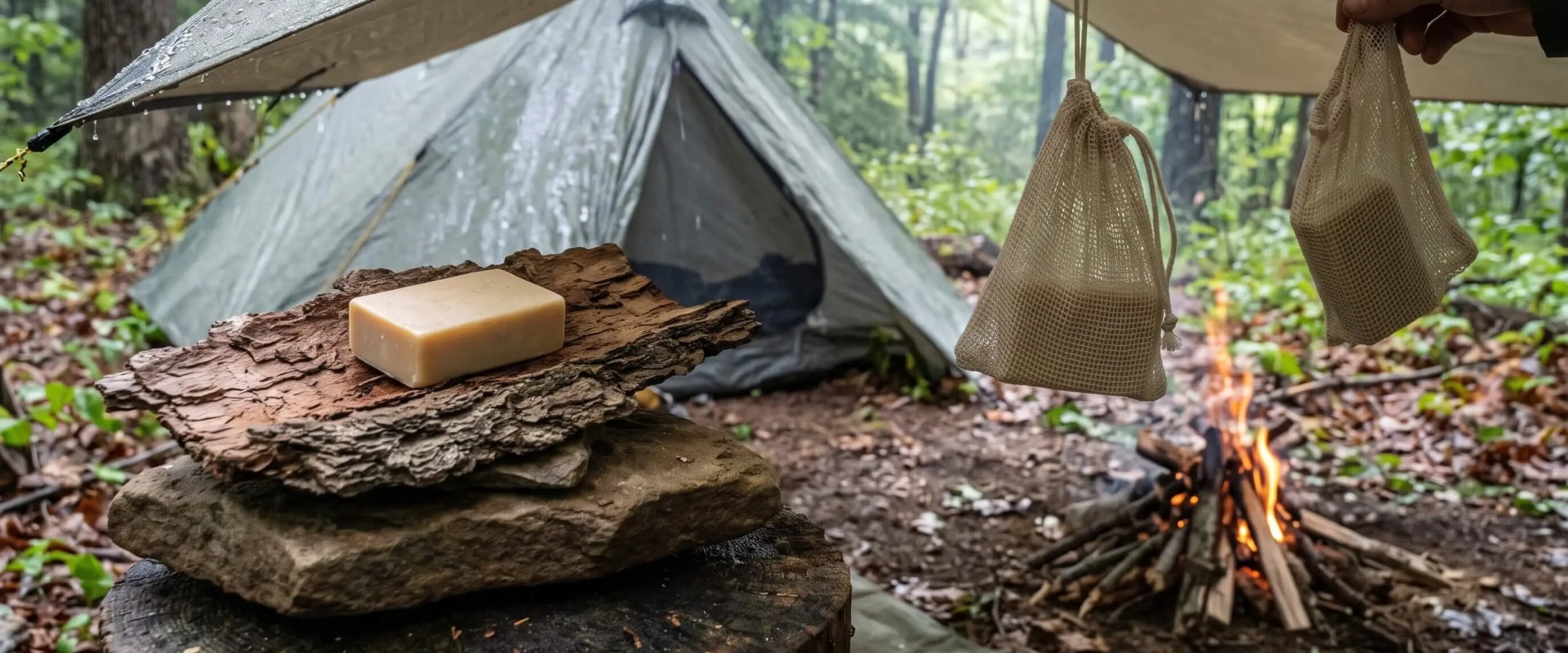
Keeping dry soap dry at camp has less to do with shutting out the weather and more to do with giving the bar somewhere to drain. Most campers learn that the slow way. With kids along it matters even more, since a usable bar is often all that stands between clean hands at dinner and trail dirt wiped on everyone's pants.
TL;DR Quick Answers
Dry Soap
Dry soap can mean a bar kept dry enough to stay firm, or a waterless soap that cleans with no rinsing at all. At a rainy campsite, the second kind solves the first problem, because a soap that never gets wet can't turn to mush.
Keeping a bar dry: cut it into small pieces, carry it in a vented case, and hang it in a mesh bag under cover.
Skip sealed bags: a wet bar zipped in plastic stays wet and goes soft within a day or two.
Using waterless dry soap: rub a dime-sized drop on dry hands until clumps form, then brush the dirt away.
Why it suits camping: there's no bar to go soft, no rinse water to haul, and no soapy runoff near streams.
Water saved: up to two gallons per use, according to NOWATA.
Top Takeaways
A wet bar sealed in plastic stays wet, so give it drainage and airflow instead of a waterproof bag.
Cut the bar into small pieces before the trip. You'll wet less soap and each piece dries faster.
At camp, hang soap in a mesh bag under the tarp, well away from the tent floor and walls.
A soggy bar can usually be saved by trimming it, slicing it thin, and letting the pieces air-dry under cover.
Wash at least 200 feet from water, even when the label says biodegradable.
On long wet trips, a dry soap that needs no water takes the mushy-bar problem off the table.
Why Bar Soap Turns to Mush on Rainy Camping Trips
Soap starts breaking down the moment it sits in water. The same structure that lets it lift grease off your skin also lets water pull it apart, and if you want the chemistry, Wikipedia has a solid explainer on what soap actually is.
Handmade bars add a wrinkle. Many keep their natural glycerin, which draws moisture out of humid air, so a bar can go soft on a muggy night without a drop of rain touching it.
Camping in the rain piles on from there. A wet bar zipped into plastic has nowhere to drain. Tent walls and dry bags sweat condensation overnight, even when the rain stays outside. And after a couple of gray days, nothing at camp gets enough sun or breeze to dry out.
7 Ways to Keep Soap Dry While Camping in the Rain
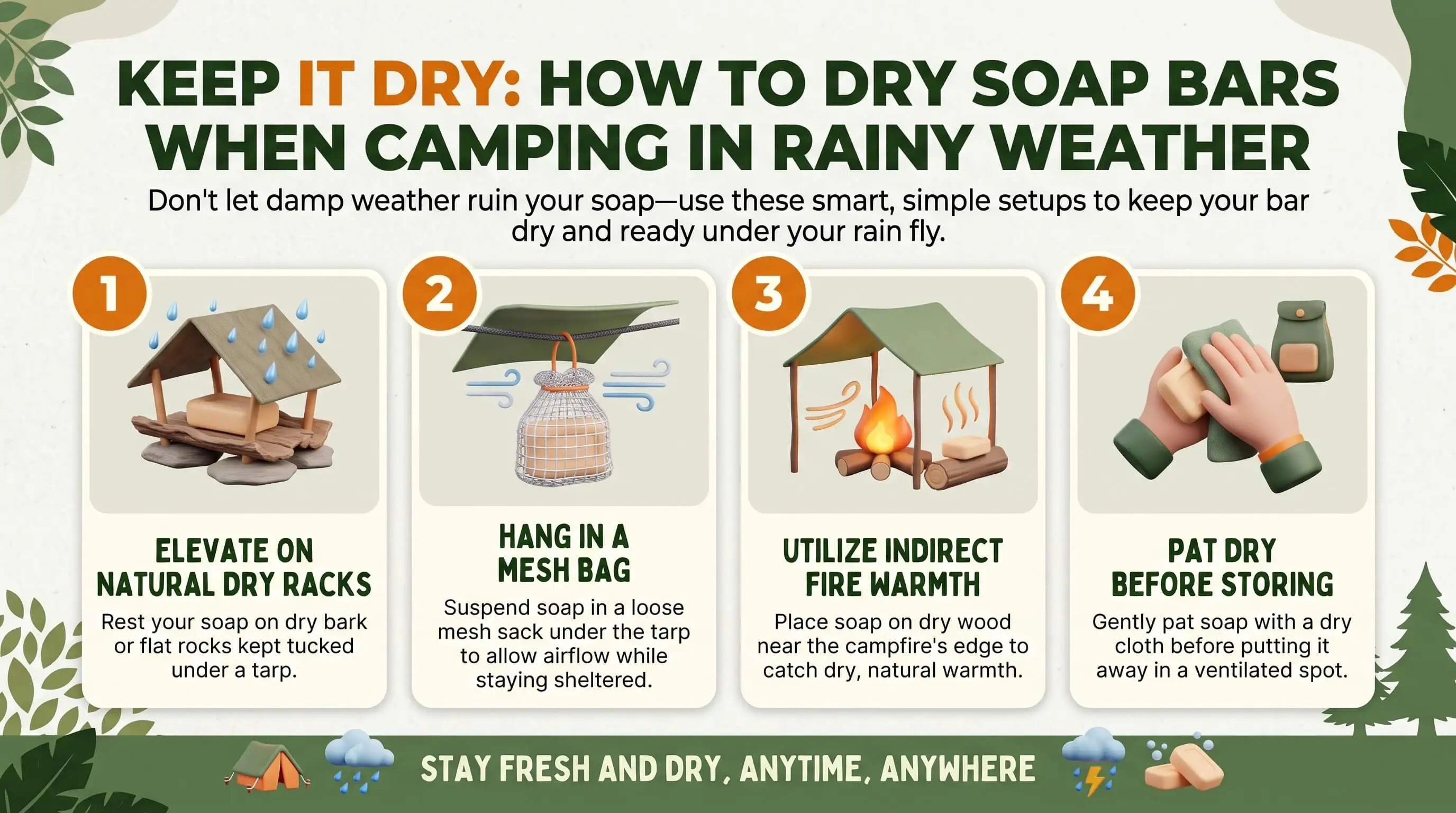
1. Cut the Bar Into Trip-Sized Pieces Before You Leave
Slice the bar into thumb-sized chunks at home. You'll only wet one piece at a time while the rest stays hard in reserve, and smaller pieces dry faster anyway.
2. Pack It in a Vented Case, Not a Sealed Bag
A travel case with drain holes and vents lets rain and rinse water run out instead of pooling under the bar. Save the zip-top bag for a bar that's already bone dry.
3. Hang It in a Mesh Bag Under Cover
Drop the bar into a mesh soap bag, or knot it into the toe of an old nylon stocking, and hang it from a guyline or the tarp's ridgeline. It drips clean and dries far faster than it would lying flat. The mesh also makes a decent scrubber for grimy knuckles.
4. Pat It Dry Before It Goes Back in Your Pack
Thirty seconds with a camp towel gets rid of the surface water that would otherwise soak in overnight.
5. Keep It Off the Tent Floor and Away From the Walls
Runoff collects on the floor and condensation beads on the walls, so a lid pocket or gear loft is the safer spot. On a drive-in site, your car is often drier than the tent.
6. Bring a Harder, Well-Cured Bar
Bars that have cured for several weeks hold their shape longer than fresh or glycerin-heavy ones. If sensitive skin is part of the picture, this guide to choosing an eco-friendly camping soap for sensitive skin covers the ingredients worth checking.
7. Carry a Backup That Doesn't Need Water
After four or five wet days, even a well-hung bar loses the fight. That's when a soap that never has to get wet earns its spot in the pack.
Which Soap Storage Works Best in Wet Weather?
Zip-top bag: fine for a bone-dry bar in transit, but it traps every drop once the bar is wet.
Sealed plastic case: packs well and drains nothing, so it suits dry-weather weekends better than rainy ones.
Vented case with drain holes: the one to use on travel days, since water runs out and air gets in.
Mesh soap bag: the best airflow of the bunch at almost no weight. Hang it under cover once camp is set.
Tin with a draining insert: a little bulky for a backpack, but solid for car camping and base camps.
For a rainy trip, we'd pair a vented case for moving days with a mesh bag at camp.
How to Dry Out a Soggy Soap Bar at Camp
A soft bar is usually salvageable. Drain and blot it first, then trim off the slimy outer layer with a pocketknife. Slice what's left thin and lay the pieces on a dry cloth under the tarp, somewhere air can move around them. On drive-in trips, a dashboard on a dry afternoon speeds things up.
Leftover mush can go into a mesh bag and live on as a scrubber. One shortcut we'd skip is propping the bar next to the campfire, because heat melts soft soap faster than it dries it.
Where Your Soapy Water Goes Still Matters
Leave No Trace asks campers to wash at least 200 feet from lakes and streams and to keep the soap to a small amount. Scatter your strained wastewater or pour it into a small cathole. The same rules apply to soap labeled biodegradable, because it still needs soil and time to break down.
When Dry Soap Means Skipping Water Entirely
There's another way to read "dry soap," and on a soaked trip it may be the more useful one. A rinse-free soap that works without water leaves you with no bar to go soft and no rinse water to haul 200 feet from the creek.
NOWATA comes from Dr. Ruslan and Dr. Yalda, two parents who got tired of sanitizers that left chemicals on their kids' skin and soap that wasted gallons of water. They spent two years building a plant-based, alcohol-free, biodegradable soap that cleans without water. Put a dime-sized drop on dry hands and rub until little clumps form. Brush them off, and the dirt and grime go with them. It's safe enough for toddler snack hands and tough enough for trail grime, which covers most of what a rainy campsite throws at you.
Wondering how often a waterless formula suits reactive skin? This look at using waterless hand soap on sensitive skin walks through it.
"Most people's first move when the rain starts is to seal the soap up tight, and that's backward. A wet bar in a zip bag can go from firm to useless in two nights. Cut the same bar into pieces and hang it in a mesh bag under the tarp, and it'll usually last the week. On the really long wet stretches I stopped fighting it and started packing a waterless soap alongside the bar, because the soap you never have to wet is the one that never turns to mush."
7 Essential Resources
Leave No Trace, The Skinny on Soap. The organization's plain answer on why no soap, biodegradable or otherwise, belongs in a lake or stream. lnt.org
Leave No Trace, How to Do Your Dishes in the Backcountry. Walks you through hauling water 200 feet out and getting rid of the wastewater properly. lnt.org
Leave No Trace, Bigfoot's Guide to Dirty Dishwater. Explains why straining and scattering soapy water keeps animals from treating your campsite like a buffet. lnt.org
Backpacker, Your Biodegradable Soap Isn't as Eco-Friendly as You Think. A useful reality check on what that word on the label actually promises. backpacker.com
Horace, Tips to Make Your Soap Bars Last Longer. Practical advice from the grooming brand Horace on drain-hole dishes and traveling with a bar. horace.com
Tools of Men, 4 Ways to Properly Store Your Bar Soap. Compares dishes, saver bags, and placement, and most of it carries straight over to camp. toolsofmen.com
Ensign, Soap in a Sock. A short 1988 reader tip that's still the cheapest way to hang a bar to dry. churchofjesuschrist.org
These seven resources offer practical advice on eco-friendly soap use, proper wastewater disposal, and keeping soap bars dry and long-lasting during camping trips, with useful soap storage and hygiene tips that also apply to private home care.
3 Statistics
200 feet, or roughly 70 big steps. Leave No Trace sets that as the minimum gap between your wash spot and any lake, stream, or spring. Source: Leave No Trace
Six months to several years. Even biodegradable soap can take that long to fully break down once it reaches water, and it adds nutrients and shifts pH the whole time. Source: Leave No Trace
Up to two gallons per use. NOWATA says that's how much water each use of its rinse-free soap saves compared with washing at a sink. When every drop at camp gets carried in by hand, that adds up fast. Source: NOWATA
If you change only one habit after reading this, make it by carrying your wash water away from the shoreline.
Final Thoughts and Opinion
Wrapping your soap against the rain is the wrong instinct. Everyone reaches for the zip bag when the forecast turns gray, and almost everyone ends up with the same slimy lump by day three. A bar needs a way to shed water far more than it needs protection from it, and a hook under the tarp will do more for it than any sealed container can.
Good habits do have a ceiling, though. Once a trip runs to four or five wet days, nothing at camp truly dries and the bar spends the whole time losing ground. A waterless formula earns its place right there, because it skips the wet step altogether. That's the same low-waste thinking behind a good eco-friendly hand sanitizer alternative, and on a rainy trip it's simply the more practical choice. Bring the bar if you love it. Just don't make it your only way to get clean when the sky won't cooperate.
Frequently Asked Questions
How do you keep bar soap dry when camping?
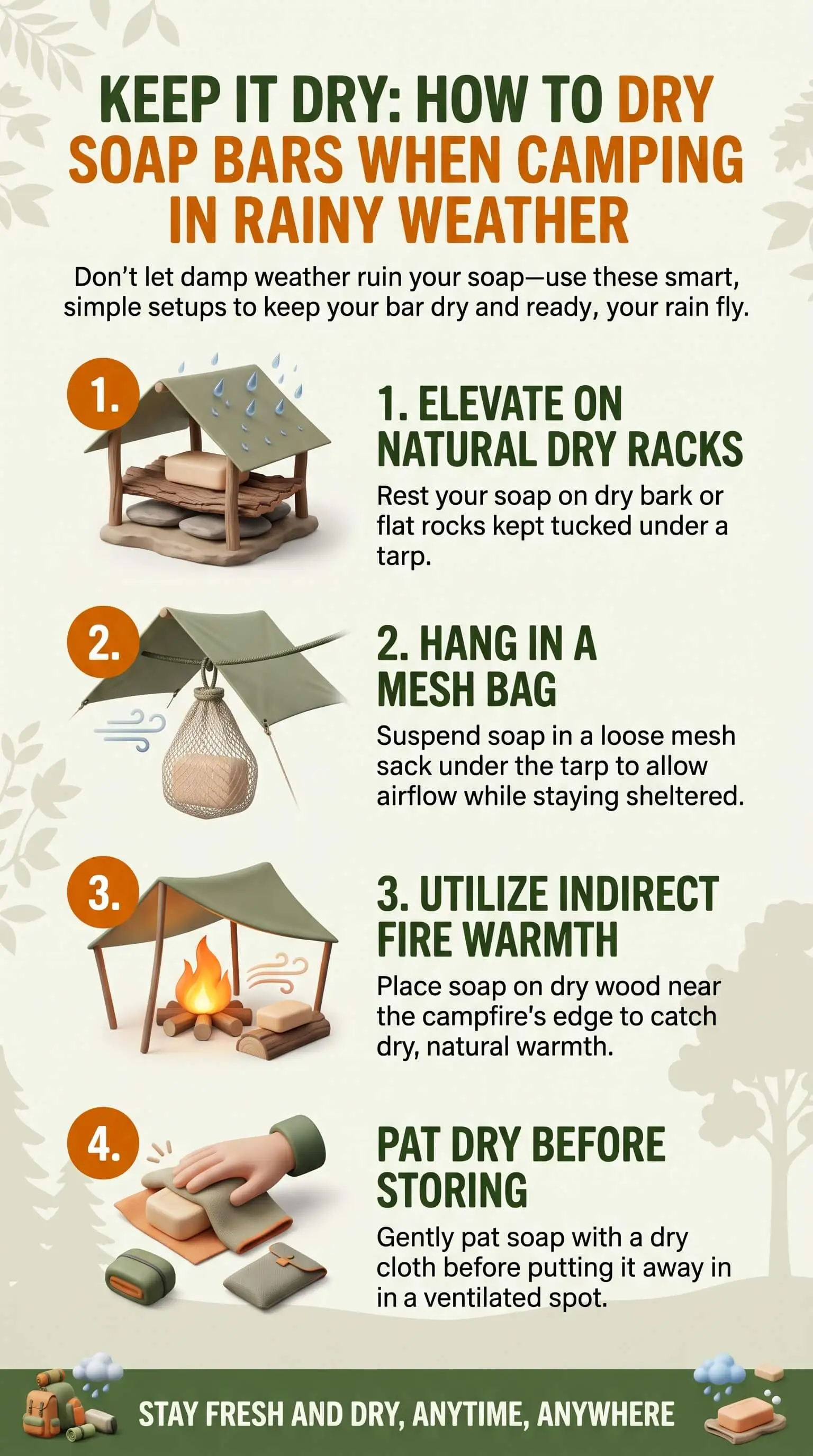
Let it drain and breathe. Carry it in a vented case with drain holes on travel days, then hang it in a mesh bag under the tarp once camp is up. A quick pat with a towel before packing it away helps more than you'd expect.
Should I store soap in a zip-top bag when it's raining?
Only if the bar is completely dry. A wet bar sealed in plastic has nowhere to drain, so it stays damp and usually goes soft within a day or two. In the rain, a vented case is the better bet.
How do you dry out a soggy bar of soap?
Blot off the surface water and trim away the slimy outer layer. Slice the rest thin and set the pieces on a dry cloth under cover where air can reach them. On a drive-in trip, a car dashboard on a dry afternoon speeds it up.
Is it okay to wash with soap in a lake or stream?
No. Leave No Trace recommends washing at least 200 feet from any water source, even with biodegradable soap. Carry your water away from the shore, use a small amount of soap, and scatter the strained wastewater or pour it into a cathole.
What is dry soap, and does it work for camping?
People use "dry soap" two ways. It can mean a bar you've managed to keep dry, or a waterless soap that cleans without any rinsing. Both help at camp, and the waterless kind is especially handy on long, wet trips or at sites where water is scarce.
Pack Smarter Before the Next Rainy Trip
Open your pack tonight and check how the soap is riding. If it's sealed in a bag, cut it into pieces, move them into a vented case, and toss a mesh bag in the kit for camp. Then add a waterless no rinse hand soap as backup, so a week of rain never leaves you without a way to clean up before dinner.